Investing in an automated packaging machine is a significant milestone for your business. It allows you to expand production capacity, reduce labor costs, and take full control of your manufacturing process. However, this transition is also where many growing brands make their most costly mistakes.
First-time buyers often harbor a common misconception: assuming a packaging machine is universally adaptable. They expect a single unit to perfectly pack coffee beans on Monday, matcha powder on Tuesday, and drip coffee bags on Wednesday.
In reality, the physical properties of your product dictate the entire engineering design of the equipment. Using the wrong filling mechanism leads to inconsistent weights, crushed products, or a factory floor covered in airborne dust.
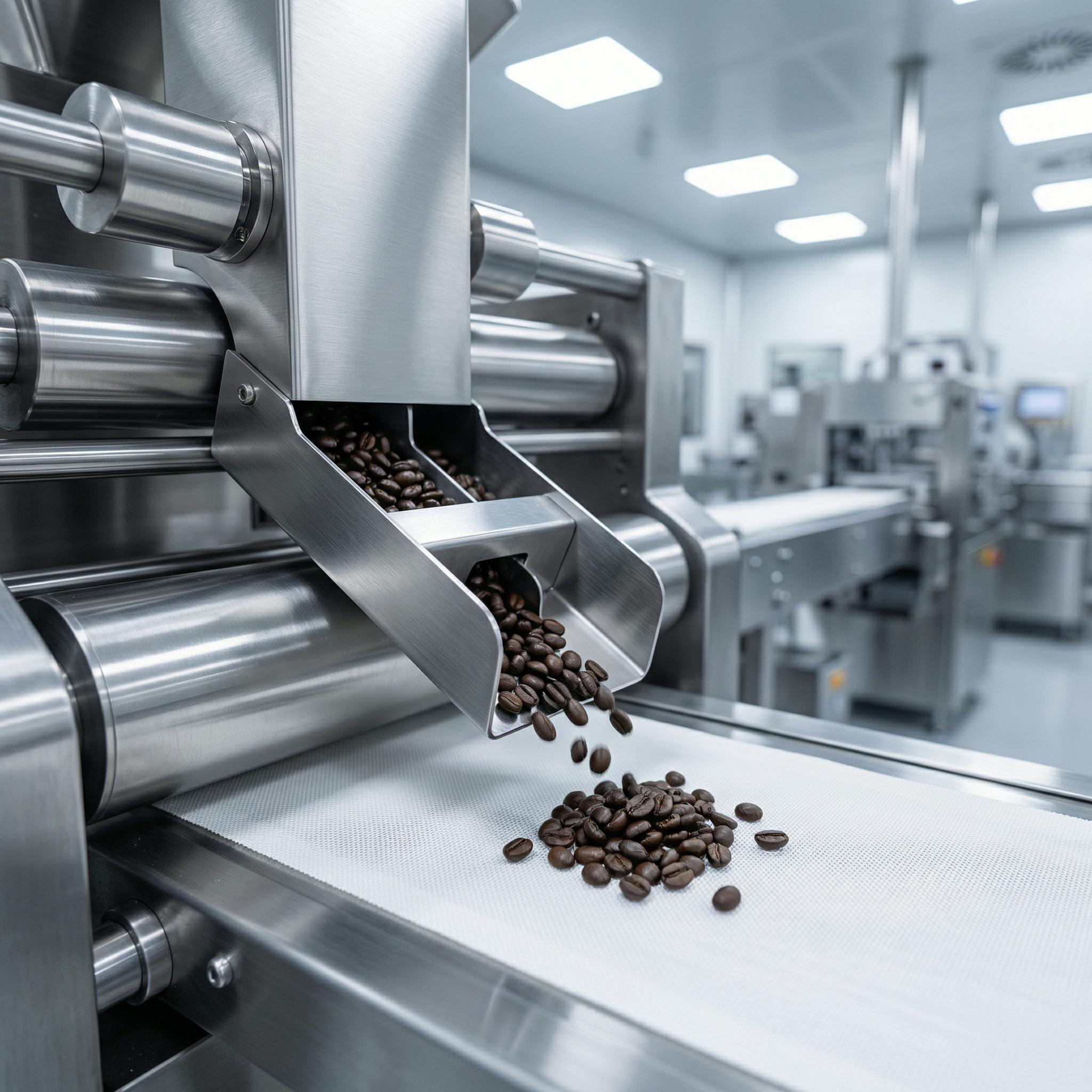
Tonchant specializes in manufacturing precision machinery for the coffee and tea industries. Before making an equipment investment, review our technical guide to understand the three primary categories of packaging machinery and identify the exact setup your production line requires.
1. The Powder Challenge: Matcha, Instant Coffee, and Fine Powders
The Physical Issue: Fine powders suffer from poor flowability. They clump together, adhere to metal surfaces due to static electricity, and generate significant dust. If this powder settles into the machine’s sealing jaws, the bag will fail to seal correctly, resulting in product leakage.
The Solution: Auger Filling Machines When packaging delicate materials like instant coffee, matcha, or cocoa powder, you need equipment featuring an Auger Filler.
Rather than relying on gravity, an Auger Filler utilizes a vertical metal screw housed inside a hopper. By rotating precisely, it forces an exact weight of powder directly into the packaging pouch. This mechanism is critical because it controls the powder distribution, preventing dust buildup. Tonchant’s powder handling equipment features a fully enclosed design, ensuring your facility remains clean and your pouches seal tightly.
2. The Granule Variable: Coffee Beans and Loose Tea Leaves
The Physical Issue: Granular materials offer excellent flowability, meaning gravity effectively moves whole coffee beans or CTC tea through a funnel. However, particle size and weight vary. If the machine’s moving parts are too aggressive, fragile materials like premium loose-leaf teas can be easily crushed during the process.
The Solution: Volumetric Cup Fillers or Multi-Head Weighers Granular items do not require an auger system. Instead, volumetric measurement or precise electronic scales provide the best results.
Volumetric Cup Fillers offer an economical and highly efficient solution for standard-sized beans or sugar. The system uses a set of measuring cups to volume-fill the product before dropping it directly into the bag. This method is incredibly fast and reliable for items with a uniform density.
Alternatively, if you are packaging high-value items requiring ultra-precise measurement, a Multi-Head Weigher is ideal. This system distributes the product across multiple bins, calculates the perfect mathematical combination to hit your exact target weight (such as exactly 250 grams), and then drops the precise amount into the pouch.
3. The Ultimate Configuration: Drip Coffee Bag Machines
The Physical Issue: Packaging drip coffee is an extremely complex “bag-in-bag” process. Freshly ground coffee must be accurately packed into delicate filter paper, ultrasonically sealed, fitted with a string and tag, inserted into an outer foil pouch, flushed with nitrogen, and finally heat-sealed.
The Solution: Dedicated Drip Coffee Bag Machinery A standard powder or granule packaging machine cannot be modified to produce drip coffee bags. This process requires a specialized, integrated system.
Tonchant’s fully automatic drip coffee machines process two rolls of film simultaneously. The internal system handles a PLA or non-woven filter roll, while the external system manages a printed foil roll. The equipment utilizes a specialized volumetric or mini-auger mechanism calibrated specifically for the unique density of medium-fine coffee grounds.
Furthermore, the system employs dual sealing technology. The delicate inner filter is sealed ultrasonically to prevent the paper from scorching. Meanwhile, the outer aluminum foil receives a robust heat seal to lock in the nitrogen flush, ensuring a stable 12-month shelf life.
The Tonchant Integration Advantage
One of the most frustrating scenarios for a production manager is investing in high-end filling equipment, only to discover that film rolls from third-party suppliers jam the gears or melt onto the heating jaws.
This compatibility issue is why leading roasters partner with Tonchant. As a one-stop manufacturer, we produce both the machinery—including auger, volumetric, and drip bag systems—and the matching packaging materials.
We supply custom-printed roll stock, PLA filters, and premium outer packaging. When you source a machine from us, we calibrate the temperature, tension, and operational speed to perfectly match the exact materials you will be running.
Do not base your next equipment investment on guesswork. Detail your production line configuration to us, and our engineering team will pair you with the exact technology you need to scale efficiently.
Contact Tonchant today to request a mechanical consultation and view operation demonstration videos for our equipment.
Post time: Mar-31-2026