For any coffee roaster, using automated machines for internal packaging is a significant milestone. It can significantly reduce unit costs and accelerate production.
However, after the machine is installed, a new challenge begins: finding the right roll film.
Ordering pre-made bags is easy, but ordering rolls (often called Form-Fill-Seal film or Roll Stock) requires specific technical knowledge. If the film you buy is too thin, it will stretch and jam the machine. If the film has poor barrier properties, the coffee will spoil on the shelf.
At Tonchant, we manufacture both automated packaging machines and the custom-printed roll films to complement them. Because we see the interaction between machines and materials every day, we have a very clear understanding of what works and what fails.
The following is a technical guide for selecting the appropriate coffee roll film material structure and thickness.
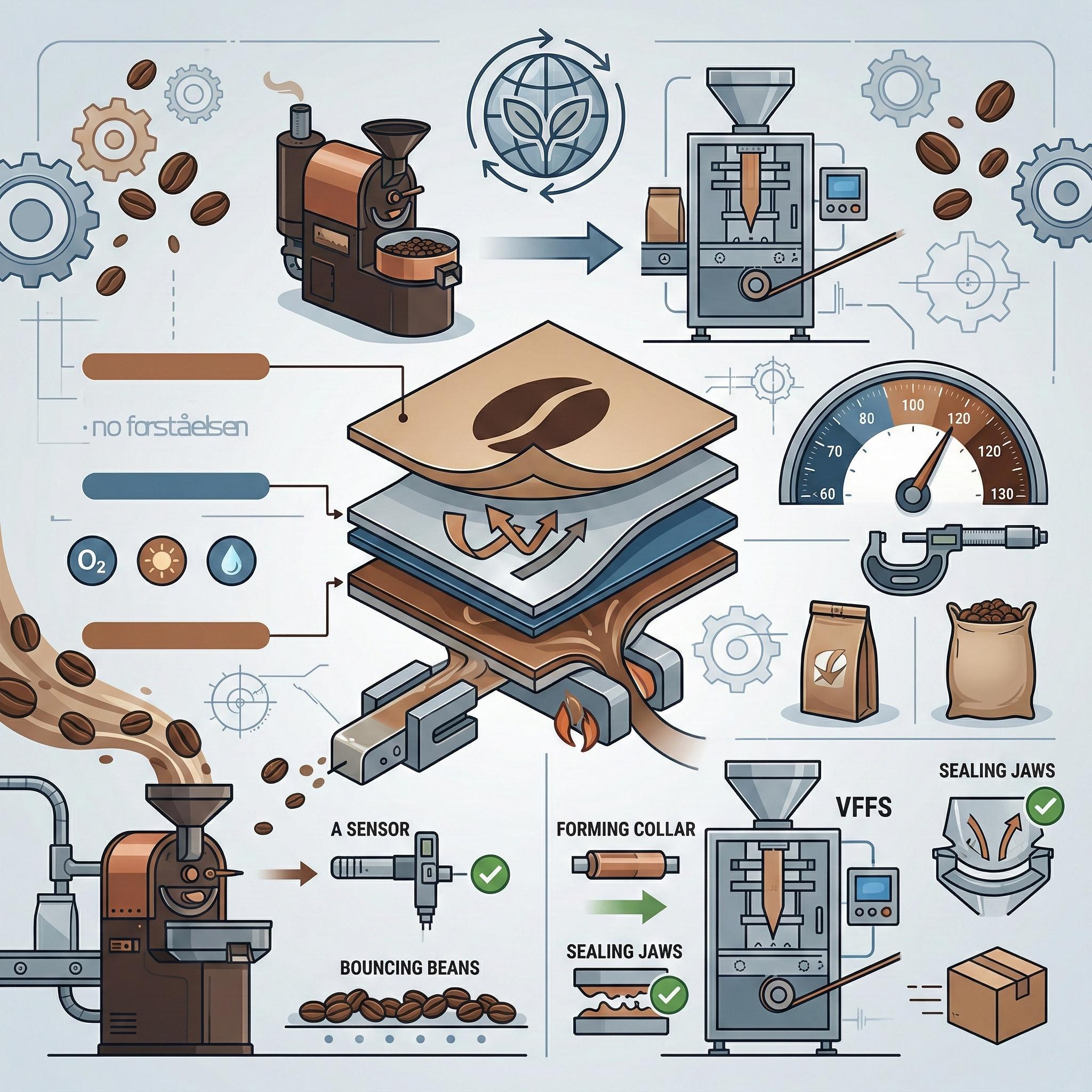
1. Understanding the “Laminated Sandwich” Structure
Roll film is not just a single piece of plastic. High-quality coffee packaging utilizes a composite structure consisting of two to four layers of different materials, each playing a specific role.
-
Outer Layer (Printing & Protective Layer): Typically made of PET (Polyethylene Terephthalate) or Kraft paper. This layer holds your custom inks, provides a glossy or matte finish, and protects the bag against scratches during shipping.
-
Middle Layer (Barrier Layer): This is the protective shield. It blocks oxygen, UV rays, and moisture, preventing them from degrading the roasted coffee beans.
-
Inner Layer (Sealing Layer): Usually made of PE (Polyethylene) or CPP. This is a food-grade safety layer that comes into direct contact with the coffee. When the heated sealing jaws of the packaging machine clamp down, this layer melts slightly to form a perfect, airtight seal.
2. Barrier Selection: Aluminum Foil vs. VMPET
The middle barrier layer is the key to determining your coffee’s shelf life and your packaging cost.
Pure Aluminum Foil (AL)
If you require a shelf life of 12 to 18 months, AL is the gold standard. It provides near-perfect protection against oxygen and light. It is ideal for premium drip coffee bags packaged with nitrogen flushing, or for whole coffee beans being exported overseas.
Metallized PET (VMPET)
This is a plastic film coated with an extremely thin layer of aluminum. It looks like aluminum foil, but it is lighter and more cost-effective. While its oxygen barrier properties are slightly lower than pure aluminum, it is more than sufficient for local retail coffee intended for consumption within 3 to 6 months.
Eco-Friendly Options (EVOH or Mono-PE)
If your brand is transitioning to sustainable packaging, you can choose high-barrier recyclable roll film. These films replace the metal layer with an advanced transparent coating (like EVOH), keeping coffee fresh while remaining fully recyclable or compostable.
3. Let’s Talk About Thickness (Microns)
Thickness is typically measured in micrometers (µm or microns) or mils. Incorrect thickness specification is the leading cause of film jams in packaging machines.
-
Too Thin (< 60 microns): The film lacks rigidity and will overstretch under the machine’s pulling tension, causing your printed logo to warp. The heat sealing jaws may also easily burn right through it.
-
Too Thick (> 140 microns): Thicker films offer a premium, sturdy feel but require much higher sealing temperatures. If your machine cannot reach or maintain this high temperature, the bags will not seal properly and may burst during transport. Furthermore, a thicker film means fewer bags per roll, increasing your shipping and storage costs.
The Tonchant Recommendation:
-
For Drip Coffee Outer Bags: A thickness of 70 to 90 microns is ideal. This is flexible enough to create neat, flat bags, yet thick enough to trap nitrogen gas effectively.
-
For 250g / 12oz Whole Bean Bags: The target thickness is 100 to 120 microns. This ensures structural integrity, allowing the bags to stand upright elegantly on retail shelves.
-
For 1kg / 2lb Bulk Bags: You need a heavy-duty film, typically 130 to 150 microns thick, to prevent the sharp edges of roasted coffee beans from puncturing the bag during transit.
4. “Runnability” Testing (Machine Compatibility)
The ultimate test for any roll film is how well it performs on your specific VFFS (Vertical Form Fill Seal) machine.
-
Can the eye-mark sensor accurately read the registration marks to cut the design in the right place?
-
Can the heat sealing jaws form a clean, hermetic seal without melting the outer printed layer?
-
Can the film smoothly glide over the forming collar without excessive friction or getting stuck?
Tonchant is a one-stop solution provider. We carefully engineer our roll films to match the specific thermal and mechanical performance requirements of modern coffee packaging equipment. We precisely calculate the Coefficient of Friction (COF) required for the film to glide flawlessly through your machine.
Choosing the Right Film for Your Production Line
Don’t let inferior roll film slow down your production line.
Whether you need gravure-printed pure aluminum foil for high-end drip bags or advanced mono-materials for eco-friendly recyclable structures, we can tailor the exact specifications to meet your product’s needs and your machine’s requirements.
Ready to test our films on your production line? [Contact Tonchant Today] to discuss your machine specifications and request sample rolls for a trial run in your facility.
Post time: Feb-28-2026