How Long Does Coffee Filter Bag Production Take? A Buyer’s Guide to Lead Time and OEM Manufacturing
For coffee brands, distributors, and importers, knowing how long coffee filter bag production takes is essential when planning product launches, seasonal promotions, and inventory replenishment. A delayed packaging order can affect more than the delivery schedule. It may also interrupt production, postpone customer orders, and increase inventory costs.
However, there is no single production timeline for every coffee filter bag. A standard filter bag, a custom-printed drip coffee bag, and a complete retail packaging set can require very different production processes.
This guide explains the main stages of coffee filter bag production, typical lead times, industry factors that affect schedules, and how buyers can reduce unnecessary delays when working with an OEM manufacturer.
1. Industry Background: What Determines Coffee Filter Bag Production Time?
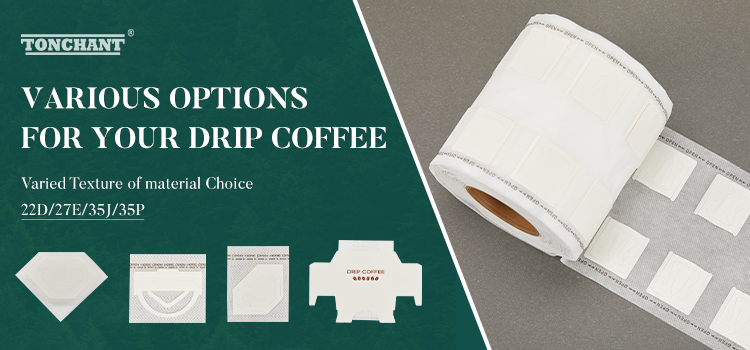
Coffee filter bags are available in several formats, including traditional hanging-ear drip coffee bags, flat filter bags, cone-shaped filters, and customized single-serve brewing bags. Each format uses different materials, converting processes, and packaging methods.
For example, a standard non-woven filter bag may require a relatively straightforward cutting and sealing process. A customized drip coffee bag order may involve filter material selection, printed outer pouches, artwork approval, sample testing, and additional packing procedures.
In OEM manufacturing, the total lead time is usually influenced by five main factors:
- Product structure: Standard filter bags are generally simpler to produce than multi-component packaging sets.
- Material selection: Paper, non-woven fabric, PLA-based materials, and laminated packaging films have different sourcing and processing requirements.
- Customization: Printing, special shapes, custom sizes, and individual packaging increase the number of production steps.
- Order quantity: Large orders may require longer machine scheduling and material preparation, although production efficiency can improve with volume.
- Sample and artwork approval: Changes to dimensions, printing, or sealing specifications can delay the start of mass production.
Important distinction: Production lead time is not the same as total delivery time. Buyers should calculate the time needed for sampling, manufacturing, inspection, shipping, and customs clearance separately.
2. Typical Coffee Filter Bag Production Timeline
For planning purposes, buyers can use the following timeline as an initial reference. The actual schedule depends on the product specification, material availability, order quantity, and factory workload.
| Production Stage | Typical Time | Main Activities |
|---|---|---|
| Requirements and quotation | 1–3 working days | Confirm product type, size, material, quantity, and pricing |
| Sample preparation | 3–10 working days | Prepare samples and check structure and brewing performance |
| Artwork and packaging approval | 2–7 working days | Confirm printing files, colors, dimensions, and packaging details |
| Material preparation and printing | 5–12 working days | Source materials and complete printing or lamination where required |
| Mass production | 7–15 working days | Bag forming, cutting, sealing, inspection, and packing |
| Final inspection and dispatch | 1–3 working days | Quantity check, quality inspection, and shipment preparation |
These are indicative planning ranges, not a guaranteed production schedule. Some stages can run simultaneously, while custom printing or special material sourcing may extend the timeline.
How long does mass production usually take?
For a standard coffee filter bag order with confirmed specifications and approved samples, mass production may take around 7–15 working days under suitable production conditions. This is a reference for a typical supplier workflow, not a universal industry standard.
For orders involving several bag sizes, different printed designs, custom outer pouches, or special materials, buyers should allow additional time for preparation and coordination.
3. Current Market Trends Affecting Production Lead Time
3.1 Growing demand for single-serve coffee packaging
Single-serve coffee formats continue to attract specialty coffee brands, offices, hotels, food service businesses, and retailers. Drip coffee bags offer a convenient brewing method without requiring a dedicated coffee machine.
As more brands introduce their own versions, manufacturers are handling a wider variety of sizes, materials, designs, and packaging configurations. This creates more opportunities for OEM production, but it also increases the importance of accurate specifications and production planning.
3.2 More customization and smaller product runs
Distributors and private-label brands increasingly want packaging that reflects their own identity. Custom logos, printed outer bags, retail boxes, and different filter bag shapes are common requests.
Smaller orders can be useful for market testing, but they do not always mean faster production. Printing setup, artwork checks, and material preparation may take a similar amount of time regardless of order size.
3.3 Sustainability and packaging compliance
Material selection is becoming more important in international sourcing. Buyers may request paper-based filters, PLA-based materials, recyclable structures, or packaging with specific environmental certifications.
In the European Union, the Packaging and Packaging Waste Regulation (PPWR) began applying from 12 August 2026. Its requirements are relevant to packaging design, material composition, waste reduction, and substances used in food-contact packaging. Buyers exporting to Europe should review the requirements that apply to their specific packaging structure.
For manufacturers, this can mean additional checks on material documentation, supplier declarations, and packaging specifications before production begins.
4. Key Factors Behind Production Delays
4.1 Raw material availability
Coffee filter bags may use wood-pulp paper, non-woven fabric, PLA-based materials, and different packaging films. Availability can vary by material type, specification, and supplier.
Paper and pulp markets are also affected by energy costs, transportation, forestry supply, and regional production capacity. Industry outlooks in 2026 have highlighted supply uncertainty and cost pressure in parts of the Asian pulp and paper supply chain.
For buyers, the practical lesson is to confirm material specifications early and avoid changing materials after sample approval unless necessary.
4.2 Printing and artwork revisions
Custom printed packaging is one of the most common sources of delay. Artwork may need revisions because of incorrect dimensions, low-resolution images, barcode placement, color differences, or missing regulatory information.
To reduce unnecessary back-and-forth, buyers should provide print-ready artwork and confirm the final layout before production. If several designs are included in one order, each version should be clearly identified.
4.3 Product testing and sample approval
A filter bag must do more than look correct. It should hold coffee grounds securely, allow water to pass through at a suitable rate, and maintain its structure during brewing.
For this reason, sample approval should include practical brewing tests. If the filter material, bag dimensions, or sealing method changes after approval, the manufacturer may need to prepare and test another sample.
4.4 Production capacity and seasonal demand
Factories may experience higher workloads before major retail campaigns, holidays, and coffee industry events. If buyers wait until the last minute to place orders, they may face longer scheduling times.
Importers and distributors should discuss expected demand with their suppliers in advance, especially when several SKUs need to be produced together.
5. Regional Considerations: Europe, North America, and Asia
| Market | Important Considerations | Buyer Recommendation |
|---|---|---|
| Europe | PPWR implementation, food-contact requirements, packaging recyclability, and material documentation | Confirm packaging structure and compliance documents before approving mass production |
| North America | Different state-level packaging EPR rules, importer responsibilities, and retail packaging requirements | Check the regulations in the destination state and clarify who is responsible for reporting |
| Asia | Regional differences in raw material supply, manufacturing capacity, and export logistics | Confirm material availability, production capacity, and shipping arrangements early |
Europe: compliance should be part of the specification
For European buyers, packaging compliance should not be left until the goods are ready to ship. The PPWR introduces requirements that may affect packaging design, material choices, and documentation. Buyers should check which provisions apply to their product and market, particularly where food-contact packaging is involved.
North America: understand EPR responsibilities
Several US states have introduced packaging extended producer responsibility (EPR) programs. Requirements differ by state, and the definition of a responsible producer may include certain importers, brand owners, or other businesses placing packaging on the market.
Importers and distributors should check their obligations before selecting packaging materials and finalizing supply arrangements.
Asia: material sourcing and production coordination
Asia remains an important manufacturing and sourcing region for paper products and packaging. However, raw material prices, shipping conditions, and supplier capacity can change. Buyers should not assume that every material or customized structure is immediately available.
6. What Coffee Packaging Buyers Should Consider
Good production planning starts before the purchase order is issued. The following steps can help importers, wholesalers, and private-label brands manage lead time more effectively.
1. Prepare a complete product specification
Provide the manufacturer with the bag type, dimensions, filter material, weight or thickness requirements, sealing method, printing requirements, and order quantity. If outer packaging is needed, include its size and structure as well.
2. Confirm samples before mass production
Check the sample’s dimensions, sealing strength, material feel, appearance, and brewing performance. Written approval helps prevent misunderstandings during production.
3. Confirm the production schedule by stage
Ask the supplier to separate sample preparation, material sourcing, printing, mass production, inspection, and dispatch. A stage-based schedule is more useful than a single estimated completion date.
4. Plan shipping separately
Manufacturing time does not include international transportation or customs clearance. Air freight, sea freight, courier delivery, and door-to-door services have different transit times and costs. Confirm the delivery method and destination before setting your inventory date.
5. Consolidate designs and SKUs where possible
If several products use the same filter material or packaging structure, coordinating them in one production plan may simplify sourcing and scheduling. However, different printing designs and specifications should still be clearly documented.
Practical sourcing tip: Businesses comparing OEM suppliers should evaluate more than the quoted production days. Ask about sample procedures, material traceability, quality inspection, production capacity, and how the supplier handles specification changes.
For companies researching coffee filter bags and related packaging formats, coffeeteabag.com also provides product information that can help buyers compare filter bag types and understand common packaging options.
7. Future Outlook: Faster Planning, More Flexible OEM Production
Coffee filter bag manufacturing is likely to become more closely connected with customized branding, material transparency, and compliance management.
Buyers may continue to request more product variations, including different filter materials, bag shapes, outer packaging designs, and retail-ready sets. This makes production planning and communication increasingly important.
At the same time, sustainability requirements are encouraging businesses to pay closer attention to the complete packaging structure rather than focusing on a single material claim. Manufacturers will need to provide clearer material information and support customers with appropriate documentation.
For importers and distributors, the most reliable approach is to build a production schedule around confirmed specifications, approved samples, and realistic shipping arrangements. Early planning will remain one of the most effective ways to reduce delays.
8. Frequently Asked Questions
Q1. How long does coffee filter bag production take?
For a standard order with confirmed specifications and approved samples, mass production may take around 7–15 working days. Custom printing, special materials, and multiple SKUs can extend the schedule.
Q2. How long does it take to make a coffee filter bag sample?
Sample preparation commonly takes around 3–10 working days, depending on the product structure, material availability, and customization requirements. Printed packaging samples may require additional time.
Q3. Does custom printing increase production lead time?
Yes. Custom printing usually requires artwork checks, color confirmation, printing preparation, and sometimes lamination or curing. Buyers should approve the final artwork before the printing stage begins.
Q4. Can I shorten the lead time for an OEM coffee filter bag order?
Prepare complete specifications, use available materials where suitable, submit print-ready artwork, and approve samples promptly. Avoiding late design or material changes is one of the most effective ways to keep production on schedule.
Q5. Does the production lead time include shipping?
Usually not. Production lead time generally covers manufacturing and preparation for dispatch. International shipping, customs clearance, and final delivery should be calculated separately.
Q6. What information should I provide when requesting an OEM quotation?
Provide the product type, bag dimensions, filter material, order quantity, printing requirements, outer packaging details, destination market, and any required certificates or compliance documents.
Q7. Does a larger order always take longer to produce?
Not necessarily. Larger orders require more production time in total, but production efficiency may improve when the same specification is manufactured in one run. Multiple designs or product variations can add complexity.
Q8. When should importers place a repeat order?
Repeat orders should be planned according to current stock, sales speed, manufacturing lead time, and shipping time. Buyers should also allow extra time for peak seasons or changes in material availability.
Conclusion
Coffee filter bag production time depends on more than the manufacturing process itself. Product structure, material availability, printing, sample approval, order quantity, and shipping arrangements all influence the final delivery schedule.
For buyers working with OEM manufacturers, the best way to avoid delays is to confirm specifications early, approve samples carefully, and request a clear production schedule covering each stage.
With proper planning and communication, coffee brands, distributors, and importers can manage lead times more effectively while maintaining consistent packaging quality.
SEO Title: How Long Does Coffee Filter Bag Production Take?
Meta Description: Learn how long coffee filter bag production takes, from sampling to mass production. Explore OEM lead times, key factors, and sourcing tips for buyers.
Suggested URL Slug: coffee-filter-bag-production-time
Primary Keyword: coffee filter bag production
Secondary Keywords: lead time, OEM manufacturing
Post time: Oct-30-2026