How to Choose Coffee Filter Paper Rolls: A Practical B2B Buyer Guide
Choosing the right coffee filter paper roll is not simply a matter of comparing price per kilogram. For filter manufacturers, packaging converters, distributors, and food service suppliers, the paper must provide consistent filtration, run reliably on production equipment, meet applicable food-contact requirements, and arrive in a format that suits the converting process.
A roll that looks suitable on a specification sheet may still cause problems if its permeability does not match the coffee grind, its width does not fit the machine, or its sealing performance is inconsistent. These issues can lead to downtime, material waste, leakage, and complaints from end customers. This guide explains the main material properties, applications, customization options, MOQ considerations, certifications, and supplier checks involved in sourcing filter paper as a finished product or as a coffee packaging material for further converting.
What Is a Coffee Filter Paper Roll?
A coffee filter paper roll is a continuous web of porous paper or filter material wound around a core. Manufacturers convert it into products such as cone filters, basket filters, drip coffee bags, and other brewing components. Depending on the application, the material may be supplied as plain filter paper, heat-sealable paper, or a specialized filter web designed for a particular machine.
Filter paper is commonly made from cellulose fibers sourced from wood pulp and, in some grades, other plant fibers. Fiber selection, refining, sheet formation, and additional treatments influence strength, porosity, water flow, and resistance to tearing when wet. Some products also incorporate sealing fibers or other components to support automated pouch production. The exact construction varies by grade and supplier.
It is useful to distinguish a roll used to manufacture filters from a finished paper filter sold to consumers. Roll buyers must consider converting requirements as well as brewing performance. The material needs to function as a filter and as a dependable production input.
Common types
- Non-heat-sealable filter paper: Used where the filter is formed or joined by a method other than direct heat sealing.
- Heat-sealable filter paper: Designed to form a seal under specified heat, pressure, and dwell-time conditions. Compatibility must be confirmed on the intended equipment.
- Bleached filter paper: Often selected for a clean white appearance and products that call for a bright filter surface.
- Unbleached filter paper: Has a natural brown appearance that some brands prefer. Color alone does not prove that a material is more sustainable.
- Application-specific filter webs: Developed for particular filter shapes, brewing systems, or automated converting lines.
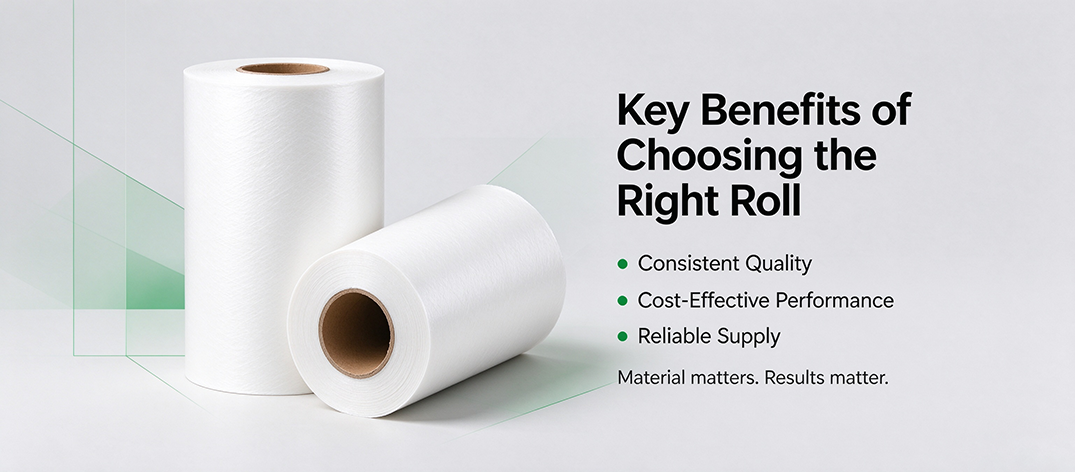
Key Benefits of Choosing the Right Roll
Consistent filtration and brewing
Porosity and permeability affect how water moves through the coffee bed. If flow is too fast, extraction may be insufficient; if it is too slow, brewing time and production consistency may suffer. The best specification is the one that performs reliably with the intended grind, dose, and brewing method—not necessarily the paper with the highest or lowest permeability value.
Reliable production
Consistent thickness, tensile strength, winding, and web tension help reduce breaks and feeding problems. For a converter running several shifts, a small increase in stoppages can outweigh a modest saving on material price. Ask for technical tolerances and, where possible, test a production-length sample rather than relying only on a small hand-cut piece.
Better control of waste and total cost
A low-cost roll can become expensive if it creates frequent rejects, poor seals, edge trimming, or inconsistent finished filters. Compare cost per acceptable finished unit, including material waste, labor, machine downtime, packaging, freight, and quality checks.
Flexibility in product development
Roll formats can be specified for different widths, grammages, core sizes, and material constructions. This can help manufacturers supply multiple filter shapes or private-label products without purchasing pre-cut filters for every design.
Applications
Drip coffee bags and single-serve filters
Drip coffee bags need a filter web that can be formed into the required pouch shape, retain the selected grind, and provide an appropriate brewing flow. If the product uses heat-sealed edges, the sealing layer and machine settings must be compatible. Evaluate samples using the actual coffee dose and outer packaging format.
Paper coffee filters
Roll stock can be converted into cone, basket, round, or other filter shapes, depending on the converting equipment and paper grade. Confirm that the paper maintains its shape when wet and fits the intended brewing device. A filter designed for one basket geometry may not fit another accurately.
Commercial food service
Restaurant groups, offices, hotels, and food service distributors need dependable replenishment and consistent product performance. Although they may buy finished filters rather than rolls directly, their requirements influence the specifications requested from converters and manufacturers.
Private-label and wholesale production
Packaging distributors and importers may source rolls for conversion under their own brands or for supply to regional filter manufacturers. In these cases, documentation, batch traceability, repeat-order consistency, and predictable lead times can be as important as the initial price.
Buying Guide: How to Evaluate Coffee Filter Paper Rolls
1. Start with the final product and machine
Identify the finished product: a cone filter, basket filter, drip coffee bag, or another format. Share the machine type, forming method, sealing method, target production speed, and known material restrictions. This helps the supplier recommend a grade that can be tested under real production conditions.
2. Compare technical specifications
| Specification | Why it matters | What to confirm |
|---|---|---|
| Grammage (g/m²) | Affects basis weight, handling, and material consumption. | Required range and allowable variation. |
| Thickness | Can influence feeding, forming, and filter structure. | Nominal value, tolerance, and measurement method. |
| Permeability / flow | Influences brewing time and filtration behavior. | Test method and suitability for the coffee grind. |
| Wet strength | Helps the filter remain intact during brewing. | Relevant data and finished-product test results. |
| Sealability | Important for pouches or filters with sealed edges. | Sealing conditions, equipment compatibility, and seal tests. |
| Roll width | Must match the converting line and product layout. | Required width, tolerance, and edge quality. |
| Core / roll diameter | Affects machine loading, unwinding, and storage. | Core inner diameter, maximum outer diameter, and roll weight. |
| Composition | Influences performance, food-contact suitability, and disposal claims. | Fiber sources, additives, sealing components, and documentation. |
Do not compare technical data unless test methods and units are reasonably consistent. Permeability values measured using different methods may not be directly comparable. Ask the supplier to explain specifications that are unfamiliar or unusually broad.
3. Select the right material and appearance
Bleached and unbleached papers can both be suitable, depending on product requirements. Choose based on performance, appearance, processing, and substantiated sourcing information rather than assuming brown paper is automatically more environmentally friendly.
For a heat-sealed product, ask whether the material contains a sealing component and whether that component affects food-contact compliance or end-of-life options. If the product will be marketed as compostable or plastic-free, request evidence that supports the exact claim for the finished item.
4. Confirm customization options
Customization may include roll width, grammage, thickness, core size, roll diameter, material construction, and packaging method. Some suppliers offer grades designed for a particular filter shape or sealing process. Not every option is available for every material, and custom specifications can affect MOQ, setup costs, price, and lead time.
For an initial inquiry, provide a drawing or sample if available. Include finished filter dimensions, machine details, expected monthly consumption, required roll size, and target market. A clear brief can reduce sample rounds and make supplier quotations easier to compare.
5. Understand MOQ and lead time
Minimum order quantity depends on whether the material is a standard stock grade or a custom specification. Standard rolls may be available in smaller trial quantities, while custom grammage, special widths, sealing constructions, or dedicated production runs can require a higher MOQ. There is no universal MOQ that applies across all suppliers and materials.
Ask suppliers to separate sample preparation, testing, production scheduling, rewinding or converting, inspection, and dispatch in their lead-time estimate. Printed or specially labeled outer packaging may add artwork approval time.
6. Check food-contact documentation and certifications
Coffee filter paper used in brewing should be suitable for its intended food-contact conditions. Request a material specification and applicable declarations or test reports for the destination market. Depending on the composition and intended use, documentation may address substances that could migrate into food or hot water.
For shipments to the European Union, check the applicable food-contact framework and relevant national requirements for the material. For the United States, confirm the applicable FDA requirements for the intended use. A generic “food grade” statement is not a substitute for documentation that applies to the specific product.
Other documents may include quality-management certificates, batch inspection records, traceability information, or environmental certifications where relevant. If a supplier claims a filter paper is biodegradable or compostable, ask which standard was used, whether certification covers the finished material or only a component, and which disposal conditions are required. Certification needs vary by market and application.
7. Assess the supplier, not just the sample
A successful sample confirms only that a particular sample worked under particular conditions. Buyers also need to know whether the supplier can maintain specifications, manage raw-material changes, provide batch records, and respond to production issues.
Ask about quality-control procedures, retained samples, complaint handling, change notification, and repeat-order consistency. For recurring programs, agree on a specification sheet and written acceptance criteria before mass production. Coffeeteabag.com can be a starting point for researching coffee filter products and related material options, but the selected grade should still be verified against the buyer’s equipment and application.
Common Buyer Concerns
Is the cheapest roll the best value?
Not necessarily. A lower unit price may be offset by higher waste, machine stoppages, inconsistent flow, or finished filters that fail inspection. Compare cost per accepted unit and assess whether the supplier can meet the agreed specification over time.
Can one paper grade be used for every filter product?
Do not assume so. Cone filters, basket filters, and heat-sealed drip coffee bags may have different requirements for flow, wet strength, forming, and sealing. Ask for application-specific recommendations and test each intended format.
Does “natural” or “unbleached” mean sustainable?
No single visual or marketing term proves overall environmental performance. Consider fiber sourcing, additives, manufacturing, transport, material use, and end-of-life options. Ask for specific evidence rather than relying on a broad claim.
What should a quotation request include?
Provide the application, preferred material, grammage, roll width, core diameter, maximum roll diameter, estimated order volume, destination country, required documents, and machine or sealing details. Include a sample or drawing where possible. Ask the supplier to state MOQ, sample availability, lead time, packaging method, and quotation validity.
How can buyers reduce the risk of a failed order?
Approve a representative sample, test it on the actual equipment, document the key specifications, and confirm acceptance criteria before production. For repeat orders, request advance notice of material or process changes and retain a reference sample where practical.
FAQ: Coffee Filter Paper Rolls
1. What is a coffee filter paper roll used for?
It is a continuous filter-paper web used to manufacture cone filters, basket filters, drip coffee bags, and other coffee filtration components. The suitable grade depends on the final format and converting process.
2. What grammage should I choose?
There is no single grammage for every application. The right value depends on strength, permeability, filter geometry, machine handling, and brewing performance. Confirm the target range with the supplier and validate it through testing.
3. What is the typical MOQ?
MOQ varies by supplier, material grade, roll dimensions, customization, and production schedule. Ask for separate quantities for standard stock material, trial samples, and custom production rather than assuming a universal minimum.
4. Can coffee filter paper rolls be customized?
Common options include roll width, grammage, thickness, core size, roll diameter, and material construction. Availability depends on the supplier and application; custom requirements may increase MOQ or lead time.
5. Which certifications should I request?
Start with food-contact documentation appropriate to the destination market and intended use. Depending on the project, you may also need quality records, traceability information, or substantiation for environmental claims. Check each document’s scope and validity and confirm that it covers the actual material supplied.
Conclusion
Choosing a suitable coffee filter paper roll requires balancing filtration performance, material consistency, converting compatibility, food-contact suitability, and total cost. The most reliable process begins with the finished filter and production line, then translates those requirements into a clear technical specification.
Before placing a bulk order, compare key paper properties, test samples under realistic conditions, clarify MOQ and lead time, and review documentation relevant to your market. If sustainability claims are part of the product strategy, verify them for the exact material and disposal route rather than relying on broad terms such as “natural” or “biodegradable.”
For distributors, wholesalers, and packaging buyers, a clear specification and a supplier capable of consistent repeat production can reduce waste, protect product quality, and make sourcing more predictable. Coffeeteabag.com provides a starting point for exploring coffee filter products and material options; the final selection should always be confirmed through technical review and application testing.
Post time: Oct-13-2026