We spend a lot of time talking about coffee beans. We talk about roasting levels, origins, and the packaging films used to keep the beans fresh.
But there is a “silent” element in packaging that is often overlooked until it is too late: The Ink.
Have you ever opened a beautifully designed gift box, expecting to smell the aroma of premium coffee, only to be met with a pungent chemical smell?
That is the smell of cheap petroleum-based ink, and it can ruin a brand.
At Tonchant, we believe true quality is reflected in every aspect of chemistry. Therefore, for our custom coffee boxes and packaging, we have shifted our focus to sustainable inks—specifically Soy-Based and Water-Based inks.
Here is why the ink you choose is just as important as the paper you print on.
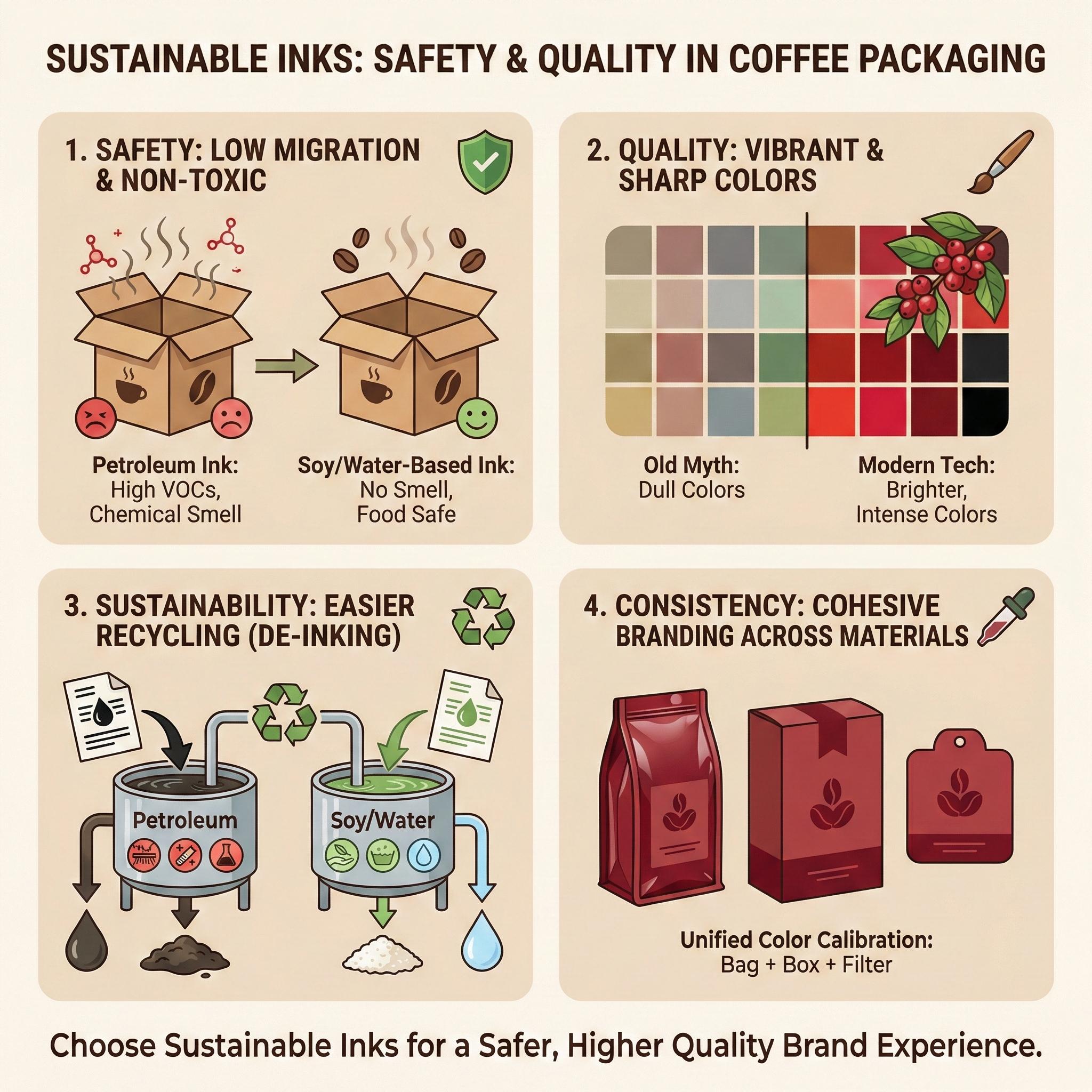
1. Safety First: Food Contact and “Migration”
Even if your coffee is sealed in a bag, the outer packaging is still part of the food environment.
Traditional petroleum-based inks contain high concentrations of Volatile Organic Compounds (VOCs). Even after the packaging dries, these compounds continue to off-gas. In the packaging industry, there is a risk known as “Migration,” where chemicals can seep through packaging layers or transfer from the box to the customer’s hands.
The Sustainable Switch: We use Soy-Based and Water-Based inks.
-
They are non-toxic and have low migration rates.
-
They are naturally safer for our printing plant workers.
-
Most importantly: They ensure that customers smell coffee, not chemicals, when they open the box.
2. Debunking the Myth: “Eco-Friendly Means Dull Colors”
Ten years ago, switching to vegetable inks meant sacrificing vibrancy. Colors often appeared dull, and black looked like dark gray.
This has changed. Modern soy ink technology has made tremendous progress. In fact, because soybean oil is clearer than petroleum (which is naturally yellowish), soy ink can actually produce brighter and richer colors.
Whether you need a deep matte black for a luxury drip coffee set or a neon pop for a summer blend, our sustainable inks deliver the same high-resolution clarity as traditional methods—without burdening the environment.
3. The Recycling Advantage (De-inking)
You might buy a 100% recyclable cardboard box, but if it’s covered in a thick layer of petroleum-based metallic ink, it becomes a nightmare for recycling centers.
Before paper can be recycled into new paper, it must undergo a process called “De-inking” (washing the ink off the fibers).
-
Petroleum inks are stubborn and require harsh chemicals to remove.
-
Soy and Water-based inks separate easily during the pulping process.
Result: Higher quality recycled paper and less toxic sludge produced by recycling plants.
4. Consistent Branding Across Materials
One of the challenges clients face is ensuring that brand colors (such as your signature “Roaster Red”) remain consistent across different materials. The red on a glossy foil bag often looks drastically different from the red on a matte cardboard box.
At Tonchant, we handle the entire packaging solution—bags, filters, and boxes—so we manage the Color Calibration for you. We tailor sustainable ink formulations to ensure your brand image remains consistent, professional, and safe across all touchpoints.
Conclusion: Details Make the Brand
Packaging is the first physical interaction customers have with your company. Don’t let chemical odors or toxic substances ruin that moment.
Choosing Tonchant’s customized packaging solutions means you get more than just a box; you get a commitment to safety, sustainability, and quality that reflects your dedication to your coffee.
Planning a new packaging design? [Contact Tonchant] to learn about our sustainable printing solutions and view our vibrant color samples.
Post time: Feb-03-2026