You spend months sourcing high-quality Ethiopian Yirgacheffe coffee beans and perfectly executing the roast profile. Your branding looks great. Yet, three months after hitting the shelves, a customer leaves a two-star review: “Bland and stale.” What went wrong?
If your packaging is tightly sealed and flushed with nitrogen, the culprit is likely a hidden metric many roasters overlook: Oxygen Transfer Rate (OTR).
At Tonchant, we manufacture flexible roll films and fully automated packaging machines for the coffee industry. We understand that protecting roasted beans is a chemical battle. Here is a concise guide to understanding OTR, why it quietly degrades coffee freshness, and how to select the right barrier materials.
What Exactly is OTR?
At a microscopic level, nothing is entirely solid. Even if a plastic bag holds water without leaking, gas molecules like oxygen will slowly pass through the material over time.
OTR measures exactly how much oxygen permeates a specific area of packaging material within a 24-hour period.
-
High OTR: Oxygen easily passes through the material (e.g., standard kraft paper or basic transparent plastic).
-
Low OTR: The material acts as a strict barrier, blocking nearly all oxygen (e.g., aluminum foil).
Why Are Drip Coffee Bags Highly Vulnerable?
Whole coffee beans possess natural protection, as their internal structure shields the oils inside. However, grinding beans for a single drip coffee bag exponentially increases the surface area.
Once exposed to oxygen, coffee grounds can lose up to 60% of their volatile aromatic compounds within 15 minutes.
If your outer packaging has a high OTR, oxygen will continuously seep into the bag on the shelf. This exposure causes the perishable fats and oils in the coffee to quickly turn rancid.
The Nitrogen Flushing Trap
Many roasters invest heavily in nitrogen flushing technology. They inject nitrogen during the sealing process to push residual oxygen levels below 1%. However, if your roll film has a high OTR, this effort is wasted.
Flushing low-barrier plastic bags with nitrogen is only a temporary fix. The nitrogen eventually escapes, allowing outside air to re-enter. Within a few weeks, the benefits of nitrogen flushing are completely lost.
To achieve a shelf life of 12 to 18 months, nitrogen flushing must be paired with high-barrier roll film.
Choosing the Right Barrier Material for Your Roll Film
When you source roll film from Tonchant for your automated packaging machines, we engineer the composite layers to control OTR based on your target shelf life.
Here is a comparison of common barrier materials:
-
Pure Aluminum Foil (AL) – The Gold Standard
-
OTR: Near zero.
-
Best For: Premium drip coffee bags, long-distance exports, or products requiring an 18-month shelf life. This material offers maximum protection against oxygen, moisture, and UV light.
-
-
Metallized PET (VMPET) – The Cost-Effective Standard
-
OTR: Very low.
-
Best For: Retail coffee intended for consumption within 6 to 9 months. VMPET is a plastic film coated with an ultra-thin layer of aluminum. It provides excellent oxygen barrier properties at a lower cost and lighter weight than pure aluminum.
-
-
EVOH / ALOx Coatings – The Sustainable Innovators
-
OTR: Low.
-
Best For: Brands transitioning to 100% recyclable, mono-material packaging where aluminum cannot be used. Tonchant utilizes advanced transparent coatings like EVOH to deliver high oxygen barriers while complying with modern environmental plastic regulations.
-
The Final Step: Seal Integrity
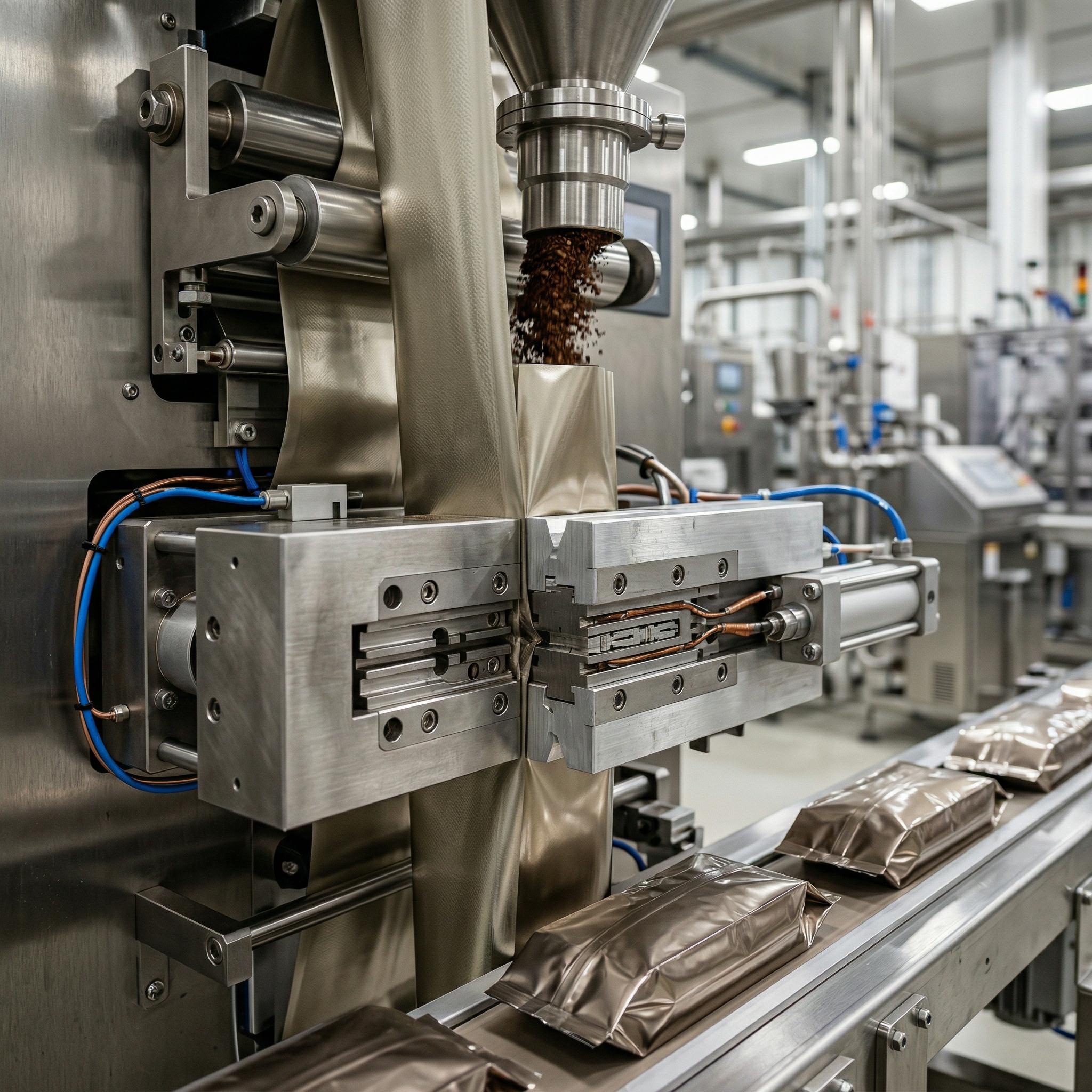
You can invest in the world’s most expensive, zero-OTR aluminum foil, but if your packaging machine leaves micro-channels in the seal, oxygen will still rush in.
This is why machine integration is critical. True synergy happens when you run Tonchant roll film on a Tonchant automated packaging machine.
Our heat-sealing jaws and ultrasonic sealing systems are precisely calibrated to the specific melting point of the barrier film, ensuring an airtight seal for every single bag.
Don’t Let Oxygen Ruin Your Roast
Packaging is the final barrier between your hard work and environmental degradation. Understanding your OTR is not just a technical detail—it is critical to maintaining your brand’s quality and reputation.
If your coffee bags lose their aroma too quickly, it is time to upgrade your barrier materials. Contact Tonchant today to request a Technical Data Sheet (TDS) for our high-barrier roll films. We will help you determine the optimal OTR for your specific coffee products.
Post time: Mar-31-2026