What Makes High-Quality Coffee Filter Paper?
A Sustainable Material Guide for Coffee Brands, Packaging Distributors, Food Service Buyers and Eco-Friendly Packaging Procurement Teams.
High Quality Coffee Filter Paper
Food Grade Filter Paper
Sustainable Packaging Material
Coffee filter paper is a small but important material in the coffee supply chain. Although it appears simple, its fiber structure, filtration performance, and food-contact safety directly influence coffee extraction quality and consumer experience.
For packaging distributors, restaurant chains, importers, wholesalers, and sustainable packaging procurement managers, choosing the right high quality coffee filter paper requires more than comparing prices. Material source, manufacturing process, certifications, and environmental impact all affect the final product performance.
With increasing demand for sustainable coffee solutions, buyers are paying closer attention to renewable materials, compostability, biodegradability, and responsible sourcing. Understanding the technical characteristics of coffee filter paper helps companies make better purchasing decisions.
What Is High-Quality Coffee Filter Paper?
Coffee filter paper is a specially engineered cellulose-based filtration material designed to separate coffee grounds from brewed coffee while allowing water and soluble coffee compounds to pass through.
Unlike ordinary paper products, coffee filter paper must maintain strength when exposed to hot water while providing controlled filtration performance. The material needs to balance filtration speed, durability, and flavor neutrality.
Natural Cellulose Material
Most premium coffee filter papers are produced from renewable plant fibers such as virgin wood pulp and abaca fiber.
Controlled Filtration
The fiber structure controls water flow rate, extraction consistency, and coffee clarity.
Food Contact Safety
Professional grades are manufactured according to beverage-contact safety requirements.
Material Source of Coffee Filter Paper
The performance of coffee filter paper begins with the selection of raw materials. Different natural fibers create different filtration characteristics.
| Material | Source | Characteristics | Application |
|---|---|---|---|
| Virgin Wood Pulp | Renewable wood cellulose fibers | High purity, stable fiber structure, consistent quality | Pour-over filters, drip coffee bags |
| Abaca Fiber | Natural plant fiber from abaca leaves | Excellent wet strength and durability | Premium specialty coffee filters |
| Cellulose Blend | Combination of natural fibers | Balanced performance and cost efficiency | OEM coffee products |
Industry Insight:
Premium coffee filter papers often combine virgin wood pulp and abaca fibers to achieve the balance between filtration efficiency, wet strength, and brewing consistency.
How Is Coffee Filter Paper Produced?
Producing high-quality filter paper requires precise control from fiber preparation to final conversion. Each stage affects strength, porosity, and filtration performance.
01
Fiber Preparation
Natural cellulose fibers are cleaned and refined to achieve consistent material quality.
02
Sheet Formation
Fibers are evenly distributed to create a controlled filtration structure.
03
Drying & Testing
Thickness, moisture, strength and porosity are carefully controlled.
04
Conversion
The paper is converted into filters, rolls, and customized shapes.
Key Properties and Characteristics of High-Quality Coffee Filter Paper
The performance of coffee filter paper depends on several technical characteristics. Professional buyers should evaluate not only appearance but also filtration behavior, durability, and safety performance.
1. Controlled Porosity
Porosity determines how quickly water passes through the filter. High-quality paper provides balanced flow speed to support consistent coffee extraction.
If pores are too small, brewing may become slow. If pores are too large, coffee particles may pass through and reduce cup clarity.
2. Excellent Wet Strength
Coffee filter paper must remain strong when exposed to hot water.
Strong wet performance helps prevent tearing, leakage, and brewing failure, especially in drip coffee bags and commercial applications.
3. Flavor Neutrality
Premium filter paper should not introduce unwanted odor or taste into coffee.
This allows coffee brands to maintain the original aroma and flavor characteristics of their products.
4. Uniform Thickness
Consistent paper thickness ensures stable brewing performance and reliable production quality.
This is especially important for automated packaging processes.
5. Food Contact Safety
Coffee filter paper directly contacts hot beverages, so material safety is a key purchasing consideration.
Buyers should request food-contact testing documents from suppliers.
6. Batch Consistency
Reliable manufacturers maintain stable quality between production batches.
This reduces operational problems for distributors and coffee brands.
Advantages of High-Quality Coffee Filter Paper
Choosing premium filter paper provides benefits throughout the coffee supply chain, from manufacturing efficiency to consumer experience.
Consistent Brewing Results
Stable filtration helps coffee brands deliver the same taste experience across different locations and production batches.
Improved Customer Experience
Clean filtration reduces sediment and allows the natural characteristics of coffee to be highlighted.
Lower Production Risk
Strong and reliable paper reduces filter breakage and manufacturing interruptions.
Sustainable Material Choice
Cellulose-based filter papers support companies developing renewable packaging solutions.
Limitations of Coffee Filter Paper
Although coffee filter paper provides excellent filtration performance, buyers should also understand its limitations before selecting materials.
- Coffee filters are generally single-use products.
- Different brewing systems require different paper specifications.
- Premium fiber materials may have higher costs compared with standard grades.
- Compostability depends on local waste management systems.
- Additional packaging layers may affect overall environmental impact.
For example, a restaurant chain purchasing millions of coffee filters annually may need to balance sustainability targets with supply stability, cost control, and operational requirements.
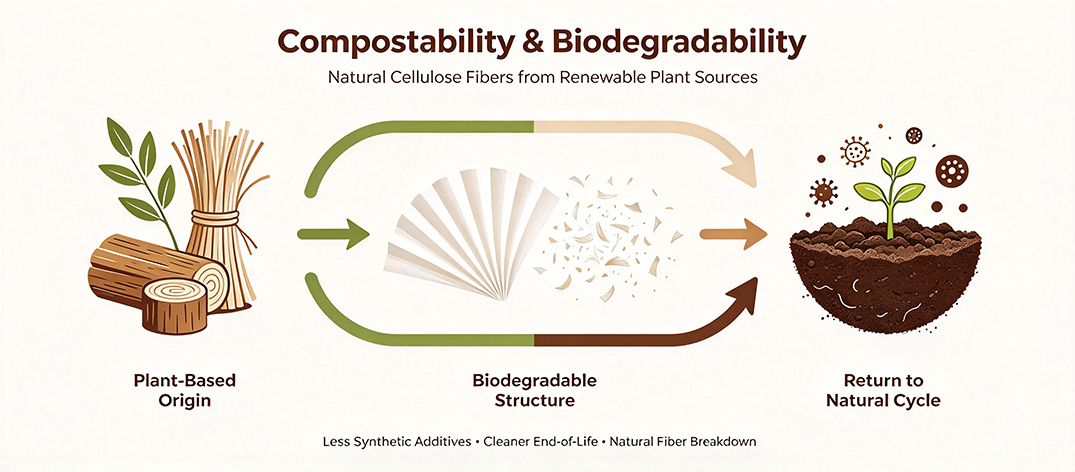
Compostability and Biodegradability
Most coffee filter papers are produced from natural cellulose fibers, which are biodegradable because they originate from renewable plant materials.
However, buyers should understand the difference between biodegradable and compostable claims.
| Term | Definition |
|---|---|
| Biodegradable | A material that can naturally break down through biological processes over time. |
| Compostable | A material that breaks down under defined composting conditions and meets specific standards. |
| Industrial Compostable | Requires controlled commercial composting facilities for proper decomposition. |
Environmental Impact of Coffee Filter Paper
The environmental performance of coffee filter paper depends on the complete lifecycle, including raw material sourcing, manufacturing energy, transportation, and disposal methods.
Responsible Material Selection
Using renewable cellulose fibers from responsibly managed sources can reduce dependence on fossil-based materials.
Reduced Plastic Dependence
Compared with synthetic plastic filtration materials, cellulose-based filter paper offers a more natural alternative for many coffee applications.
Certification Support
Certifications such as FSC and compostability standards help buyers verify sustainability claims.
Common Applications of Coffee Filter Paper
High-quality coffee filter paper is widely used across different coffee businesses. The required specifications often depend on brewing methods, production volume, and customer expectations.
Specialty Coffee Brands
Specialty coffee companies often require premium filtration materials to maintain flavor clarity and provide a consistent brewing experience.
Examples include pour-over filters, cone filters, and customized drip coffee bag solutions.
Restaurant Chains
Large food service groups need reliable filter paper that performs consistently across multiple locations.
Stable supply and quality control are especially important for high-volume purchasing.
Coffee Roasters
Roasters use customized filter paper solutions for private label coffee products and single-serve brewing formats.
Packaging Distributors
Distributors require flexible suppliers who can provide different sizes, materials, and packaging formats.
Hospitality Industry
Hotels, cafes, and catering companies choose filter paper solutions that provide convenience and stable brewing quality.
OEM Coffee Manufacturers
Manufacturers need customized filtration materials that match different equipment and packaging requirements.
Coffee Filter Paper Comparison With Other Materials
When selecting filtration materials, buyers should compare performance, sustainability, and application requirements.
| Material | Advantages | Limitations | Typical Usage |
|---|---|---|---|
| Coffee Filter Paper | Natural fibers, excellent filtration, food-safe, customizable | Single-use application | Drip bags, pour-over filters, coffee brewing |
| Synthetic Mesh Filter | Strong durability and reusable performance | Plastic-based material concerns | Reusable coffee equipment |
| Metal Filter | Long service life and reusable | Different extraction style and cleaning requirements | Home brewing equipment |
What Buyers Should Consider Before Purchasing
1. Application Requirements
The first step is identifying the final application. A drip coffee bag, V60 filter, and automatic brewing system may require different paper structures.
2. Material Composition
Buyers should understand whether the filter paper uses virgin wood pulp, abaca fiber, or blended cellulose materials.
3. Food Safety Documentation
For beverage applications, suppliers should provide testing documents proving that the material meets food-contact requirements.
4. Customization Capability
Professional suppliers can customize:
- Filter size and shape
- Paper thickness and GSM
- Material composition
- Packaging format
- Private label solutions
Certification Considerations
Certifications help buyers evaluate product safety, sustainability, and supplier reliability.
FDA Compliance
Common requirement for food-contact products in the US market.
EU Food Contact Compliance
Supports European market requirements for beverage materials.
FSC Certification
Shows responsible sourcing of forest-based materials.
Compostability Standards
Helps verify environmental claims when applicable.
MOQ and Lead Time Considerations
MOQ depends on product type, customization requirements, material selection, and production method.
| Product Type | Typical MOQ Range | Suitable Buyers |
|---|---|---|
| Standard Filter Paper Products | 10,000 – 20,000 pcs | Distributors and regular buyers |
| Customized Filters | 30,000 pcs or above | Coffee brands and OEM projects |
| Filter Paper Rolls | Based on weight requirements | Industrial packaging applications |
Lead time usually depends on customization complexity, order quantity, and production scheduling. Buyers should confirm timelines before launching new products.
FAQ
1. What makes high quality coffee filter paper different?
It combines premium fibers, controlled filtration, strong wet performance, and stable manufacturing quality.
2. Is coffee filter paper biodegradable?
Most cellulose-based coffee filter papers can biodegrade under suitable conditions. Specific claims depend on certifications and disposal environments.
3. What is food grade filter paper?
Food grade filter paper is designed for safe contact with food and beverages and must meet relevant regulatory requirements.
4. Can coffee filter paper be customized?
Yes. Buyers can customize size, shape, material structure, packaging, and branding options.
5. How should buyers select a supplier?
Evaluate manufacturing experience, certifications, quality control systems, customization ability, and supply capacity.
Conclusion
Choosing high quality coffee filter paper requires evaluating more than cost. Raw materials, production technology, filtration performance, food safety, certifications, and environmental impact all influence the final product value.
For coffee brands, distributors, restaurant groups, and sustainable packaging buyers, selecting the right food grade filter paper helps create reliable products while supporting responsible packaging strategies.
Tonchant Earth focuses on sustainable material solutions and works with global buyers to explore renewable filtration materials, customized applications, and environmentally responsible packaging options.
Post time: Sep-30-2026