Why Coffee Bags Need Degassing Valves
Freshly roasted coffee continues to release carbon dioxide (CO₂) after it leaves the roasting machine. This natural process, known as degassing, creates a packaging challenge: if freshly roasted coffee is sealed in an airtight bag without a pressure-release system, gas can accumulate inside the package.
As pressure increases, the bag may swell, lose its shape, or even split at the seals. Coffee packaging must therefore allow excess gas to escape while limiting the entry of oxygen, which can accelerate flavor deterioration.
A coffee bag valve, also called a one-way degassing valve, helps solve this problem. It releases excess carbon dioxide from inside the package while restricting outside air from entering.
For coffee roasters, packaging distributors, wholesalers, and food service buyers, understanding how these valves work is important when selecting coffee bags. This guide explains their materials, manufacturing process, performance, environmental considerations, and purchasing factors.
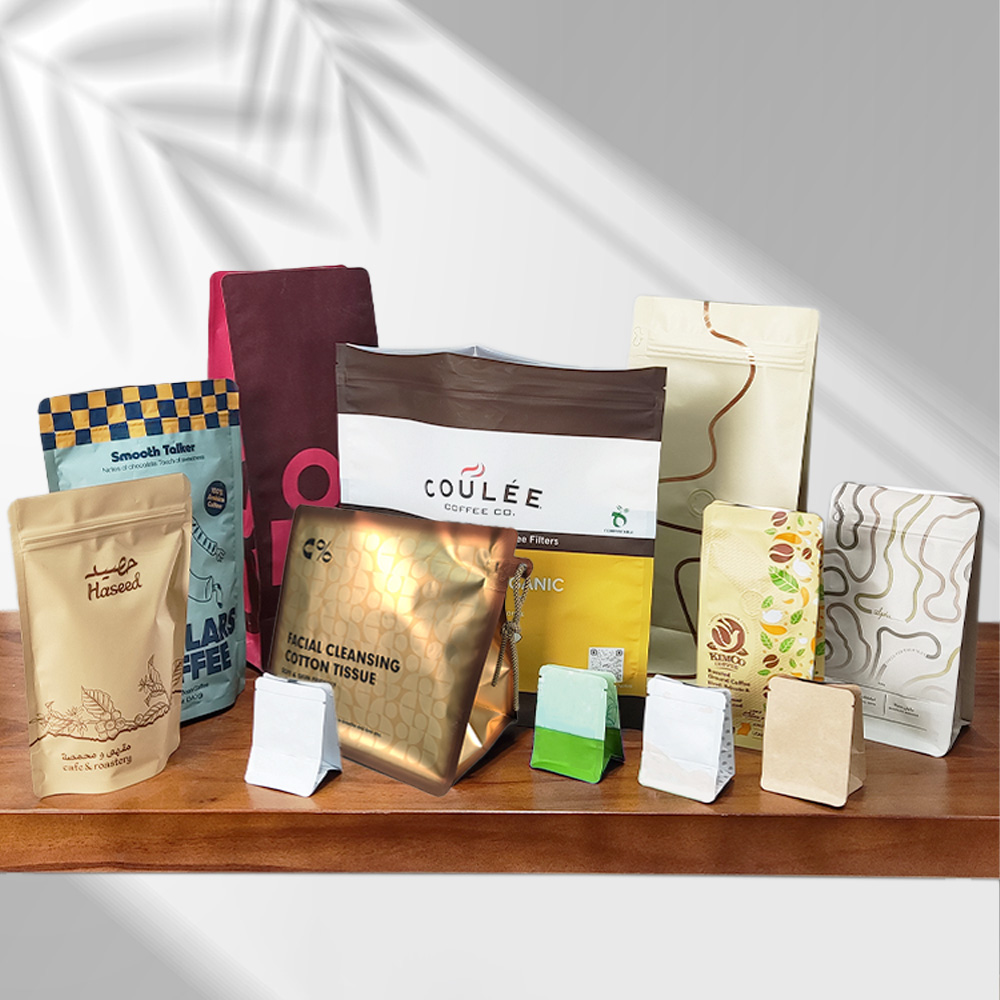
What Is a Coffee Bag Valve?
A coffee bag valve is a small, pressure-sensitive component installed in flexible coffee packaging. Most commercial designs work as one-way systems: when internal pressure reaches a certain level, the valve opens and allows accumulated gas to escape. When pressure decreases, it closes again.
- Pressure control: Helps prevent excessive gas buildup that could cause bags to expand, deform, or fail.
- Oxygen protection: Helps limit oxygen entering through the valve, reducing one potential cause of coffee oxidation and staling.
A valve does not make a package completely oxygen-proof. Performance also depends on the valve design, the seal between the valve and packaging film, and the barrier properties of the bag itself.
Why Does Freshly Roasted Coffee Release Gas?
During roasting, chemical reactions inside coffee beans generate carbon dioxide and other volatile compounds. Some gas remains trapped within the porous structure of the beans and is gradually released after roasting. The rate depends on roast profile, bean variety and density, processing conditions, and whether the coffee is whole bean or ground.
Degassing can continue for days or weeks, although the rate generally decreases over time. Darker roasts often release gas more quickly than lighter roasts, but actual behavior varies. For freshly roasted whole beans, a one-way valve is therefore a practical packaging feature rather than a decorative accessory.
How Is a Coffee Bag Valve Produced?
A coffee bag valve is a manufactured component, usually made from several small parts that work together to control gas movement. Exact construction differs between suppliers and valve designs.
- Material Selection. Common materials include food-contact grades of polypropylene (PP), polyethylene (PE), and silicone or other flexible elastomers. PP is often used for rigid housings, while flexible membranes provide the movement needed for opening and closing.
- Component Manufacturing. Rigid plastic parts are commonly made through injection molding. Resin is heated, injected into a precision mold, cooled, and removed. Flexible membranes may be produced through molding or other suitable processes.
- Valve Assembly. The housing, membrane, and other internal components are assembled. Some designs use a flexible diaphragm; others use a different pressure-responsive structure.
- Quality Inspection. Manufacturers may test opening pressure, gas-release behavior, reverse-air leakage, dimensions, membrane consistency, structural integrity, and material suitability.
- Installation on Coffee Bags. The valve is installed in a designated area of the flexible packaging film. It must be securely attached; a poorly sealed interface can become a leakage point even when the valve itself works correctly.
The finished package should be evaluated as a complete system rather than assessing the valve component alone.
Key Properties and Characteristics
One-Way Gas Release
The valve should release excess CO₂ while restricting outside air from flowing back into the package. This is particularly useful when coffee is packed soon after roasting, while gas release is still active.
Pressure Sensitivity
The valve needs an appropriate opening pressure. If it opens too easily, it may provide insufficient protection against outside air. If it requires excessive pressure, gas may accumulate before the valve activates. The correct operating range depends on the coffee, package size, valve design, and filling conditions.
Compact Construction and Film Compatibility
Valves are lightweight and can be incorporated into many flexible packaging formats. Their attachment method, sealing temperature, and installation position must be compatible with the bag material and production line.
Food-Contact Suitability
Materials should be suitable for the intended food-packaging application. Buyers should request relevant declarations of compliance and supporting test documentation. A general statement that a valve is “food grade” is not a substitute for evidence covering the actual material, intended use, and destination market.
Advantages of Using a Coffee Bag Valve
1. Helps Prevent Bag Swelling and Package Failure
Freshly roasted beans can release considerable amounts of CO₂. In a sealed package without a pressure-release mechanism, gas can cause the bag to expand. A suitable valve helps release excess gas and reduces the risk of excessive swelling and stress on seals.
2. Supports Coffee Freshness
Oxygen exposure contributes to coffee oxidation and can affect aroma and flavor. A one-way valve helps limit air entering through the valve opening. Combined with a high-barrier packaging structure, it can support better protection against oxygen exposure. It cannot compensate for poor barrier film or defective seals.
3. Supports Freshly Roasted Coffee Packaging
Roasters may want to pack coffee soon after roasting to streamline production and meet delivery schedules. A degassing valve provides more flexibility without relying entirely on extended pre-packaging degassing periods. The packing schedule should still be determined by product characteristics and quality-control procedures.
4. Improves Reliability During Distribution
Coffee bags pass through filling, carton packing, palletizing, warehousing, and international transportation. By allowing excess gas to escape, a valve helps the package maintain a more stable shape and can reduce pressure-related handling problems.
5. Works with Different Bag Formats
Valves can be incorporated into flat-bottom bags, side-gusset bags, stand-up pouches, quad-seal bags, and custom-shaped flexible coffee packaging. The final choice depends on the bag structure, installation area, equipment, and product requirements.
Limitations of Coffee Bag Valves
- Additional Cost: A valve adds a component and an installation step, increasing material and manufacturing costs compared with a similar bag without a valve.
- Potential Leakage Points: The valve-to-film interface requires reliable sealing. Poor installation, unsuitable sealing conditions, or damaged components can compromise performance.
- Not a Replacement for Barrier Packaging: The bag film must still protect coffee from oxygen, moisture, light, and external odors as required.
- Environmental Challenges: Many conventional valves contain plastic components and may not be compatible with compostable or widely recyclable packaging systems.
Common Applications
Freshly Roasted Whole Beans
This is the most common application. Whole beans retain CO₂ after roasting and release it gradually during storage. A valve helps manage this gas while the coffee is packed in a sealed bag.
Specialty Coffee
Specialty brands often emphasize roast dates, freshness, origin, and flavor. A degassing valve can support packaging strategies built around freshly roasted beans.
Commercial Roasters and Food Service
Large roasting operations may pack coffee in different sizes for retail, restaurants, cafés, hotels, and catering customers. A consistent valve specification can help standardize packaging performance across product lines.
Ground Coffee
Ground coffee generally releases gas more rapidly than whole beans because grinding increases exposed surface area. Some ground coffee products use degassing valves, but the packaging design and filling process must be evaluated carefully. Not every ground coffee product requires one.
Comparison with Other Coffee Packaging Components and Materials
A degassing valve is only one part of a coffee packaging system. It should be considered alongside the bag’s barrier materials and sealing structure.
| Packaging Option | Main Function | Typical Use | Key Consideration |
|---|---|---|---|
| One-Way Degassing Valve | Releases CO₂ and restricts reverse airflow | Freshly roasted coffee beans | Adds a component and installation cost |
| Aluminum Foil Laminate | Provides a strong barrier against light, oxygen, and moisture | Retail and specialty coffee | Difficult to recycle in many mixed-material structures |
| Metallized Film | Provides a barrier using a thin metal coating | Flexible coffee pouches | Barrier performance varies by construction |
| PE-Based Mono-Material Film | Supports certain recyclable flexible-packaging designs | Brands pursuing mono-material packaging | Barrier performance and local recycling access must be checked |
| Paper-Based Packaging | Provides a paper-forward appearance and structure | Brands seeking a paper-based presentation | Often needs a functional barrier layer for coffee protection |
Compostability, Biodegradability, and Environmental Impact
Are Conventional Coffee Bag Valves Compostable?
Most conventional valves made from PP, PE, or silicone are not designed to biodegrade in a controlled composting environment. They should not automatically be described as compostable. Some suppliers offer alternative valve designs intended for compostable packaging, but the valve’s material claim alone does not prove that the finished coffee bag is compostable.
What Is the Difference Between Biodegradable and Compostable?
Biodegradable means a material can be broken down by microorganisms under suitable environmental conditions. The speed and extent depend on temperature, moisture, oxygen, and the surrounding biological environment.
Compostable is a more specific claim. A compostable product must meet defined requirements for biodegradation, disintegration, and effects on the resulting compost under relevant test conditions. Industrial compostability does not automatically mean home compostability.
Assess the Complete Package
- Quantity and type of plastic used
- Whether the valve can be separated from the bag
- Whether the complete package is accepted by local recycling or composting systems
- Resources used during manufacturing and transportation
- The package’s ability to protect coffee and reduce product waste
- Availability of credible third-party certification
A paper-based pouch with a plastic valve and barrier lining may not be recyclable through ordinary paper recycling. Likewise, a compostable-looking pouch is not necessarily compostable if its valve, adhesive, ink, or barrier layer is incompatible with the relevant standard.
Food-Contact Safety and Relevant Certifications
The valve forms part of the food packaging system. Its materials should be suitable for the intended use and should not transfer substances to food at levels that could endanger health or cause unacceptable changes to the food.
Documentation Buyers Should Request
- Food-contact declarations or declarations of compliance
- Relevant migration test reports
- Material specifications and composition information
- Supporting documentation for applicable FDA requirements in the United States
- Compliance documentation for applicable EU food-contact legislation, including Regulation (EC) No 1935/2004 and relevant plastics requirements where applicable
Environmental Standards and Certifications
- EN 13432: A European standard for packaging recoverable through composting and biodegradation.
- ASTM D6400: A standard used for certain plastics designed for aerobic composting in municipal or industrial facilities.
- BPI Certification: A certification program for products meeting applicable compostability requirements in North America.
- TÜV Austria Certifications: Certification schemes covering specific compostability claims and testing conditions.
These standards and certifications apply to defined products and conditions. A certificate for a bag film does not automatically cover a separately purchased valve or the complete finished package. Ask suppliers to confirm whether the certification covers the valve, adhesives, inks, and other components.
What Buyers Should Consider When Selecting a Coffee Bag Valve
- Coffee Type and Degassing Rate. Consider roast profile, bean characteristics, packing time, and whether the product is whole bean or ground. A roaster packing beans soon after roasting may have different requirements from a brand that allows beans to rest before packaging.
- Valve Performance Specifications. Request opening pressure, gas-release performance, reverse-air leakage, material composition, operating conditions, and compatibility information. Avoid comparing valves based only on appearance or size.
- Packaging Material Compatibility. Confirm that the sealing method, installation temperature, and valve position work with the selected film. A high-barrier flat-bottom pouch, for example, needs a valve attachment process that does not damage the laminate or compromise the bag seal.
- Bag Size and Filling Volume. A small retail bag and a large food service bag may have different pressure-management requirements. Evaluate the valve alongside package dimensions, filling weight, and expected gas release.
- Food-Contact Documentation. Request material declarations and relevant test reports before confirming a bulk order. Check requirements in the destination market.
- Sustainability Requirements. If the project targets recyclable or compostable packaging, confirm that the valve is compatible with the intended structure and end-of-life claim. Do not rely on broad terms such as “eco-friendly valve” without supporting evidence.
- Supplier Experience and Quality Control. Ask how the valve is installed, how finished bags are tested, and which specifications can be customized. Tonchant works with coffee packaging formats for different business requirements, including customized bag structures and valve options. Confirm available materials, technical specifications, sampling procedures, and documentation before mass production.
- MOQ, Lead Time, and Shipping. Confirm minimum order quantity, sample availability, production lead time, printing requirements, and shipping arrangements. A pre-production sample helps check valve position, bag appearance, sealing quality, and compatibility with the filling process.
FAQ: Coffee Bag Valves
1. Why do coffee bags have a small round valve?
The small round component is usually a one-way degassing valve. It allows carbon dioxide released by freshly roasted coffee to escape while restricting outside air from entering the package.
2. Does every coffee bag need a degassing valve?
No. A valve is most useful for freshly roasted coffee that continues releasing significant amounts of CO₂ after packaging. Products that have been adequately degassed or use other suitable packaging systems may not require one.
3. How long does coffee need to degas after roasting?
There is no single timeframe for all coffee. Degassing depends on the roast profile, bean characteristics, processing conditions, and storage environment. Gas release is generally faster soon after roasting and gradually slows down.
4. Does a one-way degassing valve keep oxygen out completely?
No. A valve helps restrict reverse airflow, but it does not make the entire package completely oxygen-proof. The bag material, seals, valve installation, and storage conditions all affect oxygen protection.
5. Are coffee bag valves recyclable or compostable?
Many conventional valves are made from plastic or elastomer materials that are not compostable. Recyclability depends on the material, package design, and local infrastructure. Check whether the complete package has been tested for its intended disposal route.
6. Are coffee bag valves safe for food packaging?
They can be suitable when made from appropriate materials and supported by relevant compliance documentation. Buyers should request declarations of compliance and applicable migration test reports for the intended market and use conditions.
7. Can a degassing valve be added to a custom coffee bag?
Yes. Valves can be incorporated into many flexible coffee bag formats, including stand-up pouches, flat-bottom bags, and side-gusset bags. The supplier should confirm installation position, sealing method, and material compatibility.
Conclusion
A coffee bag valve plays an important role in packaging freshly roasted coffee. By releasing excess carbon dioxide while restricting reverse airflow, it helps manage internal pressure and supports the performance of the overall coffee packaging system.
However, a valve is not a standalone freshness solution. Its effectiveness depends on valve quality, attachment sealing, bag barrier properties, and the coffee’s degassing behavior.
For distributors, wholesalers, importers, and coffee brands, the best purchasing decision comes from evaluating the complete package: material structure, valve performance, food-contact safety, environmental claims, production compatibility, and total cost. Choosing the right combination of packaging material and degassing technology helps protect product quality while supporting reliable storage, transportation, and retail presentation.
Post time: Oct-20-2026