Biodegradable Tea Bags Explained:
A Complete Guide to Sustainable Tea Packaging
Discover how biodegradable tea bags help tea brands, restaurants, hotels, and retailers create sustainable packaging solutions while maintaining brewing performance, product safety, and premium presentation.
Biodegradable Tea Bags
Eco Tea Packaging
The tea industry is entering a new stage where sustainability has become an important purchasing factor. Consumers increasingly expect brands to consider not only the quality of tea leaves but also the environmental impact of packaging.
For tea brands, wholesalers, restaurants, and hospitality companies, choosing the right biodegradable tea bags requires careful evaluation of materials, certifications, production capability, and long-term supply reliability.
Biodegradable tea bags are tea filter bags manufactured from materials designed to break down naturally or under controlled composting conditions after disposal.
Plant-Based Materials
Made from renewable resources such as PLA, corn fiber, and cellulose-based materials.
Premium Brewing
Designed to provide excellent water flow and efficient tea extraction.
Sustainable Branding
Help brands communicate environmental responsibility.
| Material | Main Features | Best Application |
|---|---|---|
| PLA Mesh | Transparent appearance, strong sealing, premium feel | Luxury tea brands, pyramid tea bags |
| Corn Fiber | Plant-based, soft texture, natural positioning | Organic tea and wellness products |
| Paper Filter | Traditional appearance, cost-effective | Classic tea products |
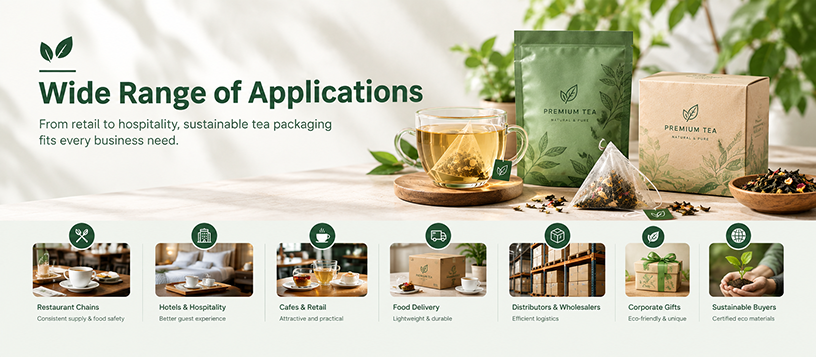
Specialty Tea Brands
Premium tea companies use biodegradable packaging to strengthen natural and sustainable brand positioning.
Hotels & Restaurants
Eco-friendly tea packaging improves guest experience and supports sustainability programs.
Private Label Products
Retailers and distributors can develop customized tea products with unique packaging designs.
- Environmental Responsibility:
Supports brands moving toward sustainable packaging solutions. - Premium Appearance:
Transparent mesh materials showcase tea leaves and ingredients. - Better Consumer Experience:
Allows convenient brewing while maintaining tea quality. - Brand Differentiation:
Creates stronger connections with environmentally conscious customers.
Professional suppliers provide complete customization solutions including:
- Tea bag shape: pyramid, flat, custom shapes
- PLA, corn fiber, and paper filter materials
- Custom tags and strings
- Individual sachets and outer packaging
- Retail boxes and gift packaging
- Logo printing and brand artwork
| Project Type | Typical MOQ |
|---|---|
| Stock biodegradable tea bags | 10,000 – 20,000 pcs |
| Custom printed tea bags | 30,000+ pcs |
| Complete OEM tea packaging | 50,000+ pcs |
Sample Development
Artwork Confirmation
Mass Production
Shipping
When purchasing biodegradable tea bags, buyers should request certification documentation to verify material claims.
EN 13432
Industrial compostability standard commonly used in Europe.
ASTM D6400
Compostability standard recognized in North America.
Food Contact Compliance
Ensures materials meet safety requirements.
1. Are biodegradable tea bags completely plastic-free?
Not always. Some compostable materials such as PLA are plant-based polymers rather than traditional petroleum plastics.
2. Which material is best for premium tea brands?
PLA mesh is commonly selected because it provides excellent visibility and premium presentation.
3. Can biodegradable tea bags be customized?
Yes. Brands can customize materials, shapes, tags, strings, and outer packaging.
4. What MOQ is required for custom production?
MOQ depends on materials, printing requirements, and packaging structure.
5. How do I choose a reliable supplier?
Evaluate manufacturing experience, certifications, quality control systems, and customization capabilities.
Conclusion
The demand for biodegradable tea bags continues to grow as brands and consumers place more importance on sustainable choices.
A successful eco tea packaging solution requires more than selecting a green material. It requires the right balance between sustainability, brewing performance, customization, certification, and supply capability.
By choosing experienced packaging partners and evaluating materials carefully, tea brands can create products that protect both tea quality and environmental goals.
Post time: Sep-20-2026