B2B Coffee Filter Paper Comparison Guide
Bleached vs Unbleached Coffee Filter Paper: Which Is Better for Commercial Coffee Programs?
A practical comparison of appearance, brewing performance, processing, cost, environmental considerations, certifications, and sourcing requirements for B2B coffee buyers.
For many consumers, the difference between white and brown coffee filter paper appears mostly cosmetic. For a procurement manager, coffee roaster, filter converter, or distributor, the decision is more technical.
The debate around bleached vs unbleached coffee filter paper involves pulp processing, color, odor control, brewing consistency, manufacturing requirements, environmental positioning, price, and compatibility with different filter formats.
Both types can perform well when the paper is properly engineered. A white bleached filter is not automatically cleaner or better tasting. A brown natural filter paper is not automatically more sustainable. The final performance depends on fiber quality, basis weight, porosity, wet strength, paper formation, processing method, and how the filter is used.
A specialty coffee brand selling premium pour-over filters may prioritize visual presentation and neutral cup characteristics. A large foodservice distributor may focus more heavily on price stability and supply continuity. A private-label filter manufacturer may need consistent heat-sealing or converting performance across millions of units.
This guide looks at both options from a commercial sourcing perspective so buyers can compare them based on the actual needs of their coffee program.
Quick Comparison Table
| Factor | Bleached Filter Paper | Unbleached Filter Paper |
|---|---|---|
| Appearance | White to bright white | Natural tan to light brown |
| Pulp Processing | Additional whitening stage | No whitening stage |
| Visual Positioning | Clean, neutral, premium | Natural, craft, sustainability-oriented |
| Potential Paper Aroma | Usually low in well-made paper | May be more noticeable depending on pulp and production |
| Brewing Performance | Can be excellent | Can be excellent |
| Cost | May be slightly higher depending on process | Often competitive, but not always cheaper |
| Typical Buyer | Premium retail, branded filter products, mainstream foodservice | Natural brands, specialty coffee, sustainability-led packaging programs |
What Is Bleached Coffee Filter Paper?
Bleached coffee filter paper begins with cellulose pulp that undergoes a whitening process after pulping. Modern filter paper manufacturing can use different bleaching systems depending on the mill, pulp source, and market requirements.
The result is a white filter with a clean, neutral appearance. This look is familiar in commercial coffee equipment, supermarket coffee filters, laboratory-style filtration, and many premium pour-over products.
The bleaching stage changes the color of the paper, but it does not define the filter’s flow rate or cup quality by itself. Those properties are controlled through fiber selection, paper density, pore structure, thickness, and manufacturing conditions.
Buyers should therefore avoid selecting white paper based on color alone. Two white filter papers can behave very differently in the same brewer.
What Is Unbleached Coffee Filter Paper?
Unbleached coffee filter paper is made without the additional whitening stage used to produce bright white paper. It retains more of the natural tan or light brown color associated with cellulose pulp.
This is why it is often marketed as natural filter paper.
The visual difference is obvious, but the technical performance can be very similar to bleached paper when both products use comparable pulp, basis weight, and pore structure.
Unbleached paper is popular with organic coffee brands, craft packaging programs, eco-oriented retailers, and companies that prefer a less processed appearance.
One practical concern is paper aroma. Some brown filter papers can release a noticeable woody or papery smell when exposed to hot water. This is not universal, but it is a reason buyers should conduct brewing tests rather than evaluating samples only by touch and appearance.
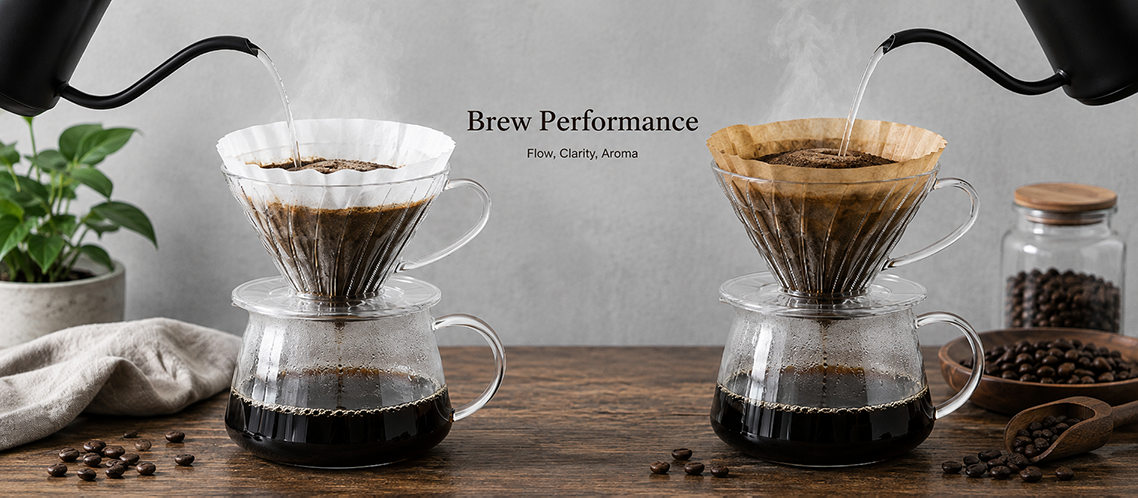
Key Differences Between Bleached and Unbleached Filter Paper
In commercial purchasing, the biggest differences are usually found in processing, appearance, branding, and sensory perception rather than basic filtration capability.
| Area | Bleached | Unbleached | Why It Matters |
|---|---|---|---|
| Color | White | Natural brown | Influences branding and consumer expectations |
| Processing | Additional bleaching stage | Fewer whitening steps | Relevant to process and environmental messaging |
| Paper Aroma Risk | Often relatively neutral | Can be more noticeable in some grades | May affect specialty coffee perception |
| Marketing Position | Clean and conventional | Natural and craft-oriented | Can influence shelf presentation |
| Flow Rate | Depends on paper specification | Depends on paper specification | Color alone does not determine brewing speed |
Advantages of Bleached Coffee Filter Paper
Clean Visual Appearance
White filter paper has a familiar, neutral look. This can be valuable for private-label retail products where brands want the filter itself to feel clean and standardized.
Low Visual Interference
White filters work well with printed cartons, branded holders, and premium coffee presentations because the filter does not visually compete with the packaging design.
Potentially Lower Paper Aroma
Well-made bleached filters often have very little noticeable paper odor. For light-roast specialty coffees with delicate floral or fruit notes, buyers may consider this particularly important.
Broad Market Familiarity
Consumers already recognize white paper filters as a standard coffee brewing format. This can reduce the need to explain the material in mainstream retail or foodservice applications.
Advantages of Unbleached Coffee Filter Paper
Natural Appearance
Brown paper communicates a more natural, minimally processed aesthetic. It fits well with kraft cartons, natural-color packaging, organic coffee programs, and sustainability-focused merchandising.
Simple Environmental Story
Because the pulp avoids a whitening stage, unbleached paper can support a less processed packaging story. That does not automatically make the total environmental footprint lower, but it can be easier for consumers to understand visually.
Strong Fit for Specialty Branding
Specialty roasters often pair natural filter paper with craft packaging, single-origin coffee, or low-plastic product ranges to create a coherent visual identity.
Commercial Flexibility
High-quality unbleached paper can be converted into cone filters, basket filters, drip coffee bags, round filters, and custom formats much like bleached paper.
Performance Comparison
Performance is where buyers should move beyond the simple white-versus-brown distinction.
The most important properties include:
- Flow rate
- Basis weight
- Thickness
- Pore distribution
- Wet strength
- Creping or surface texture
- Heat-sealing capability where required
- Flavor neutrality
Flow Rate
A common assumption is that unbleached paper is slower or thicker. That may be true for a specific product, but it is not a reliable general rule.
Flow depends primarily on how the paper is engineered.
A fast-flow white filter may produce a shorter brew time than a dense brown filter, but another supplier can manufacture the opposite combination.
Cup Clarity
Both types can retain fine coffee particles and oils effectively. The pore structure matters more than paper color.
Buyers seeking a very clean cup should evaluate sediment, oil retention, and total brew time using the actual grind specification.
Paper Taste
This can matter in specialty coffee.
An unbleached paper with noticeable fiber aroma may benefit from pre-rinsing before brewing. In a café, this is easy enough. In a single-serve drip coffee product where the consumer may not rinse the filter, it becomes more important to select a neutral paper grade from the beginning.
In factory testing, we generally recommend brewing the filter with hot water alone before testing it with coffee. The water-only test can reveal paper aroma that would otherwise be hidden by a darker roast.
Cost Comparison
It is tempting to assume unbleached paper should always be cheaper because it involves less processing. In practice, commercial pricing is more complicated.
Filter paper cost depends on:
- Pulp source
- Fiber quality
- Basis weight
- Paper width
- Roll specification
- Wet-strength requirements
- Heat-sealing functionality
- Production volume
- Certification requirements
- Freight and destination
Bleaching adds processing, but a high-grade unbleached specialty paper can still cost more than a standard white paper.
This is especially relevant when comparing products from different mills.
Compare equivalent specifications. Ask both suppliers to quote the same basis weight, width, roll diameter, filtration performance, certification level, and annual quantity.
For large wholesalers and filter converters, a difference of only a few percentage points becomes significant across many tonnes of paper. For a premium coffee brand, however, the difference in raw paper cost may be small compared with the value of the finished retail product.
Environmental Impact Comparison
Environmental comparisons require some care.
Unbleached paper avoids the additional whitening stage, which can reduce some processing inputs. This is one reason buyers often view brown filter paper as the more natural choice.
Bleached paper requires additional processing, but modern pulp production can use controlled bleaching systems designed to reduce undesirable by-products.
The total environmental footprint of either paper also depends on:
- Forest management
- Pulp mill efficiency
- Energy source
- Water treatment
- Transportation distance
- Basis weight
- Conversion waste
- Packaging used around the filter
A lighter bleached filter produced close to the converting plant may, in some cases, use fewer resources overall than a heavier unbleached paper transported much farther.
This is why responsible procurement should look beyond color.
What About Compostability?
Cellulose-based coffee filter paper can be suitable for composting under appropriate conditions, but buyers should not automatically claim that every finished filter is compostable.
Heat-seal coatings, synthetic fibers, adhesives, printed components, support materials, and packaging laminates can affect the end-of-life profile.
If compostability is part of the selling point, verify the complete filter construction and any relevant certification.
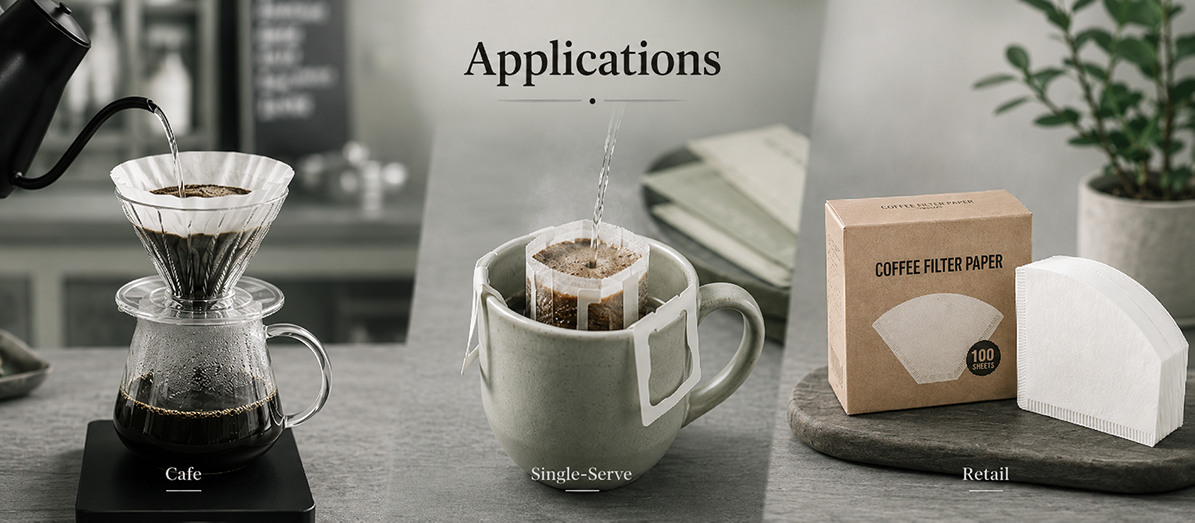
Applications Comparison
| Application | Bleached Paper | Unbleached Paper | Buyer Consideration |
|---|---|---|---|
| Specialty Pour-Over | Excellent | Excellent | Sensory neutrality and flow rate matter most |
| Drip Coffee Bags | Very suitable | Very suitable | Machine compatibility and paper odor matter |
| Hotel / Foodservice | Common | Suitable | Price and supply stability are important |
| Natural / Organic Brand | Suitable | Often preferred | Visual alignment with brand identity |
| Private-Label Filter Retail | Strong fit | Strong fit | Packaging design and consumer positioning decide |
Pros and Cons Summary
Bleached Filter Paper
Pros
- Clean white appearance
- Often very neutral in aroma
- Familiar to mainstream consumers
- Excellent branding flexibility
- Available in many filter specifications
Cons
- Requires additional pulp processing
- May not fit a natural packaging aesthetic
- Environmental perception can depend on bleaching method
Unbleached Filter Paper
Pros
- Natural brown appearance
- Strong fit for eco-oriented branding
- Avoids whitening stage
- Can deliver excellent brewing performance
- Works well with kraft-style packaging
Cons
- Some grades may have more paper aroma
- May require pre-rinsing for sensitive coffees
- Not automatically more sustainable in every case
Which One Is Better?
Neither type is universally better.
Bleached paper is often the stronger choice when visual cleanliness, sensory neutrality, and mainstream consumer familiarity are the priorities.
Unbleached paper is often preferable when the brand wants a natural visual identity and is comfortable validating the paper for aroma and brewing performance.
For a specialty roaster selling light-roast pour-over coffee, a neutral white paper may be easier to work with if the goal is maximum flavor clarity.
For an organic coffee brand using kraft cartons and natural graphics, brown paper may create a more coherent product.
For a high-volume distributor, both may be technically suitable. The decision may come down to price, mill capacity, roll availability, customer preference, and supply stability.
How Buyers Should Choose
1. Start With Brewing Performance
Test flow rate, brew time, sediment, and flavor with the actual coffee and grind specification.
2. Conduct a Hot-Water Paper Test
Brew the paper without coffee and taste the water. This is particularly useful when comparing unbleached papers.
3. Confirm Converting Requirements
If the paper will be heat sealed, folded, die cut, or used on automatic machinery, provide the supplier with the exact machine requirements.
4. Compare Technical Data
Ask for basis weight, thickness, roll width, wet strength, filtration characteristics, and any heat-seal specification rather than comparing only visual samples.
5. Review Certification
Depending on the destination market, buyers may request FDA-related food-contact documentation, EU food-contact declarations, migration testing, or other applicable material compliance information.
Buyers with forest-management requirements may also request documentation relating to responsible pulp sourcing where available.
6. Consider MOQ and Supply Continuity
Specialty filter papers may have larger production minimums than standard grades. Ask whether MOQ applies per width, basis weight, paper grade, or total order.
A distributor operating several converting machines may be better served by a standard paper specification with reliable long-term supply than by a highly specialized grade available only occasionally.
7. Request Production Samples
Small sheets are useful for initial evaluation, but production rolls provide much more information about tension, cutting, sealing, folding, and machine stability.
At Coffeeteabag, we recommend treating paper selection as a combination of brewing and converting tests. A paper that produces an excellent cup but performs poorly on the packing line is not a practical commercial specification.
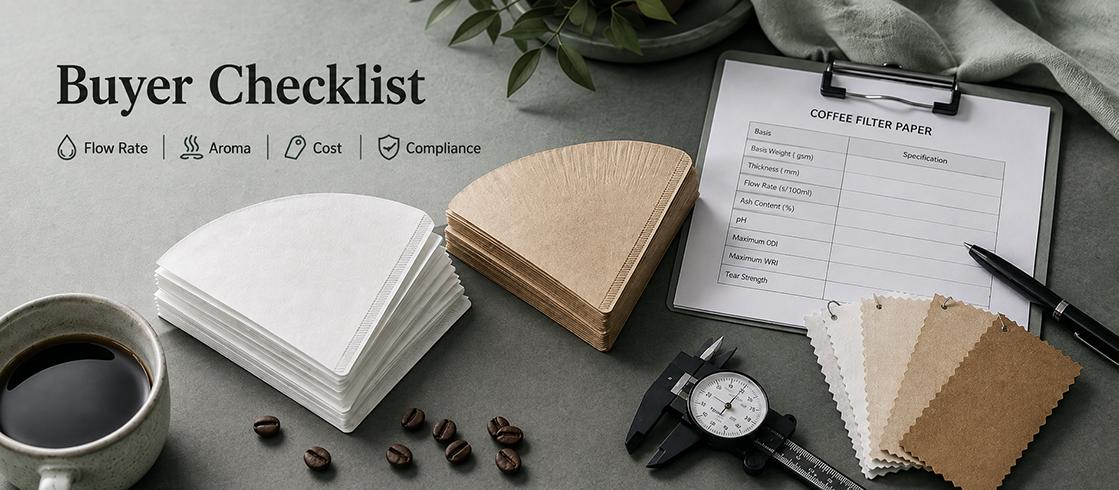
Common Buyer Concerns
Does bleached paper contain harmful bleach residue?
Buyers should not judge food-contact safety based simply on paper color. Request the relevant compliance and test documentation for the exact filter paper grade.
Is brown paper always more environmentally friendly?
No. It avoids a whitening stage, but total environmental performance also depends on pulp sourcing, manufacturing efficiency, transport, paper weight, and disposal conditions.
Will unbleached paper change coffee flavor?
Some grades can have more noticeable paper aroma, while high-quality natural papers may be very neutral. Test before purchasing large volumes.
Can the same machine run both papers?
Often yes if dimensions and mechanical properties are similar, but tension, stiffness, sealing, cutting, or feeding behavior can differ by grade.
Should we choose based on color?
Color should be a branding consideration, not the main technical criterion. Brewing performance and converting reliability are more important.
Frequently Asked Questions
1. Does bleached coffee filter paper make better coffee?
Not automatically. Cup quality depends much more on pore structure, flow rate, paper quality, grind, dose, and brewing method than paper color.
2. Does unbleached filter paper need rinsing?
Some natural papers benefit from rinsing because hot water can remove loose fibers and reduce paper aroma. The need varies by paper grade.
3. Which paper is better for drip coffee bags?
Both can work. Buyers should focus on wet strength, heat-sealing capability where required, filtration speed, taste neutrality, and machine compatibility.
4. Is natural filter paper compostable?
Cellulose paper may be suitable for composting, but the complete finished filter must be considered. Coatings, adhesives, synthetic fibers, or attached components can affect compostability.
5. What should B2B buyers request before ordering?
Request technical specifications, food-contact documentation, production samples, MOQ, lead time, roll dimensions, filtration data, and confirmation of machine compatibility.
Post time: Aug-22-2026