The coffee filter bag market is entering 2026 with stronger commercial interest—and much closer scrutiny—than it received only a few years ago.
Restaurant chains are testing drip coffee bags in breakfast and takeaway programs. Hotels are using them to improve in-room coffee without installing capsule machines. Food delivery companies see them as a compact addition to meal kits, while distributors are developing private-label ranges for offices, retailers, and hospitality customers.
The attraction is easy to understand. A coffee filter bag offers real ground coffee in a convenient single-serve format. The consumer needs only a cup and hot water.
For buyers, however, the product is not quite as simple as it looks.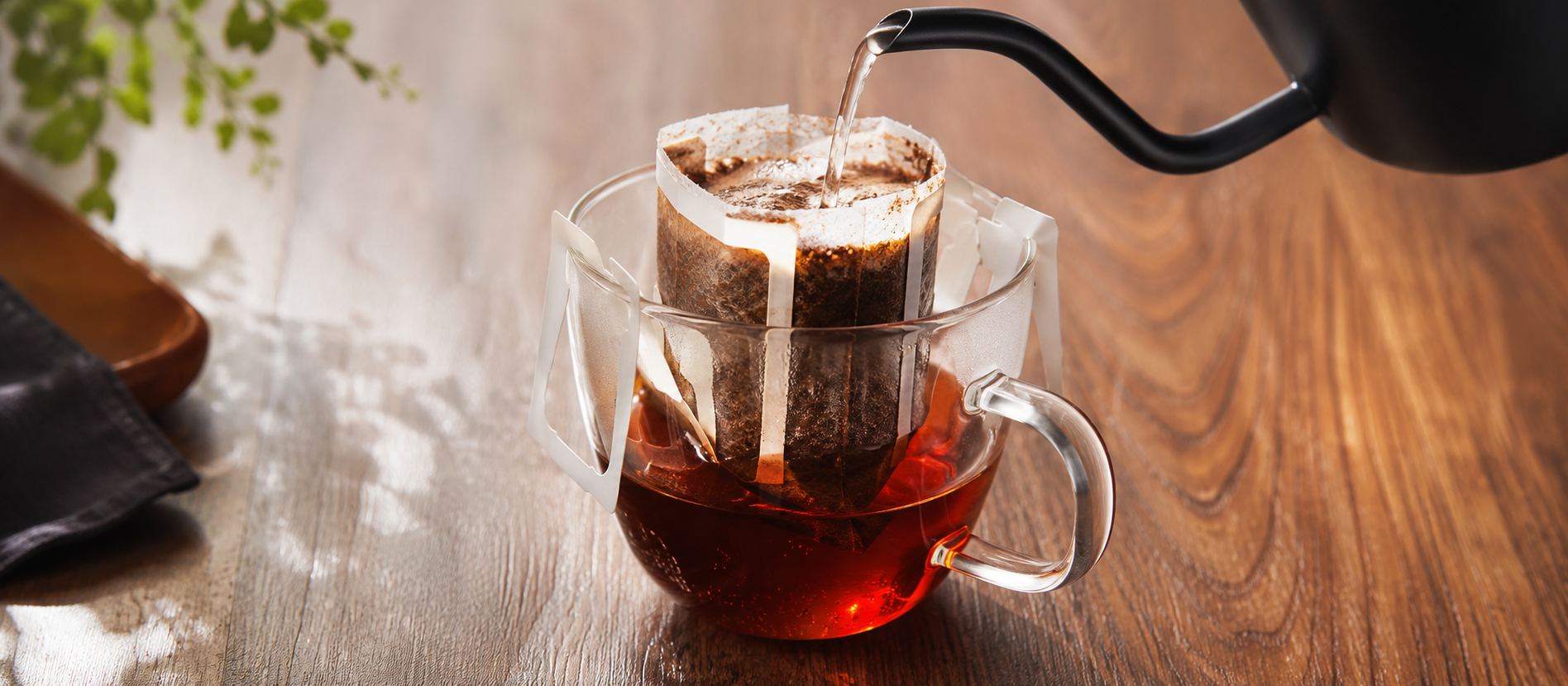
Filter flow, coffee grind, pouch barrier, shelf life, printing method, minimum order quantity, compliance documentation, and future packaging regulations all influence whether a project works commercially.
The most important coffee packaging trends in 2026 reflect a wider shift toward flexible production, better documentation, more cautious sustainability claims, and closer coordination between coffee and packaging.
Industry Background
The term “coffee filter bag” covers several related products, including hanging-ear drip bags, steeped coffee pouches, empty filter components, and individually wrapped single-serve coffee products.
In this article, the coffee filter bag market mainly refers to filters containing ground coffee that are brewed directly over or inside a cup.
The format is already familiar across much of Asia. In Japan, South Korea, China, and parts of Southeast Asia, individually packed drip coffee is sold through convenience stores, supermarkets, hotels, offices, and online platforms.
Interest is now expanding in Europe and North America.
One reason is the continued strength of at-home coffee consumption. According to the National Coffee Association, 66% of American adults drank coffee daily in early 2025. Specialty coffee reached 46% of adults, compared with 39% in 2020. The share of consumers buying coffee online also doubled from 7% to 14% during the same period.
These figures do not measure drip bags alone, but they help explain the opportunity. Consumers increasingly want coffee that is easy to prepare without feeling cheap or overly processed.
Coffee itself also remains expensive and volatile. The International Coffee Organization’s Composite Indicator Price averaged 304.68 US cents per pound in December 2025. Prices had eased from November, but weather, currency movements, inventories, and export conditions continued to create uncertainty.
For buyers, that has a practical consequence: when the coffee inside the package becomes more valuable, packaging mistakes become more expensive.
An unsuitable filter can waste coffee through poor extraction. A weak seal can damage an entire production batch. Excess printed inventory becomes harder to justify when both coffee and packaging costs are high.
Selected Market Indicators Entering 2026
| Market Indicator | Recent Signal | Relevance to Buyers |
|---|---|---|
| U.S. adults drinking coffee daily | 66% in early 2025 | Supports continued demand for convenient formats |
| U.S. adults drinking specialty coffee daily | 46% in 2025 | Creates room for premium single-serve coffee |
| U.S. consumers purchasing coffee online | 14% in 2025, up from 7% in 2020 | Favors lightweight samples and subscription products |
| ICO Composite Indicator Price | 304.68 US cents/lb in December 2025 | Makes cost control and inventory planning more important |
| EU PPWR general application date | August 12, 2026 | Accelerates packaging and compliance reviews |
| Estimated global coffee production | 178.8 million 60-kilogram bags | Improves supply expectations, but volatility remains |
Current Market Trends
Convenient Coffee Is Becoming More Premium
Convenience used to mean choosing between instant coffee and a capsule machine. That gap is narrowing.
A drip coffee bag gives consumers a more recognizable brewing experience. It contains roasted and ground coffee, can carry origin and tasting information, and still requires very little equipment.
This positioning is useful for foodservice buyers.
Consider a restaurant group with 70 locations. Its flagship sites have espresso machines, but smaller branches do not have enough space, staff, or daily volume to justify the equipment. A drip coffee bag gives those locations a way to serve a consistent coffee product using only hot water.
Hotels face a similar decision. Capsule machines improve convenience but bring equipment costs, maintenance, and compatibility issues. Drip bags are easier to store and require no machine.
They will not replace café-made coffee, nor are they intended to. Their role is to provide a better option in situations where full brewing equipment is impractical.
This shift toward higher-quality convenience is one of the clearest coffee packaging trends influencing product development in 2026.
More Buyers Want Private-Label Products in Smaller Runs
Private-label demand is growing, especially among distributors, wholesalers, hotel groups, and restaurant chains.
At the same time, many buyers are resisting the large inventory commitments associated with traditional printing.
A distributor may want the same filter under four customer brands. A roaster may need separate packaging for several coffee origins. A restaurant group may require different languages or legal information for multiple markets.
Digital printing makes these projects more manageable.
Instead of developing a new filter for every product, buyers can use a standard filter platform and change the outer pouch or carton. This modular approach lowers development risk and simplifies reordering.
From a factory perspective, it is often the more reliable route as well. Standard filters have known sealing, filling, and brewing performance. Most of the customization can happen on packaging components that do not affect extraction.
Sustainability Claims Are Becoming More Specific
Sustainability remains important, but vague environmental language is losing credibility.
Buyers are asking more detailed questions:
- Is the filter bio-based or certified compostable?
- Does compostability require industrial conditions?
- Is the pouch recyclable in the destination market?
- Does a paper appearance hide a multilayer plastic structure?
- Are the adhesive and printing inks included in the certification?
Europe is driving much of this change.
The EU Packaging and Packaging Waste Regulation entered into force on February 11, 2025 and generally applies from August 12, 2026. It introduces requirements related to packaging minimization, recyclability, labeling, recycled content, substances of concern, and producer responsibility.
The immediate impact on the coffee filter bag market is not a universal ban on one material or format. It is a stronger expectation that importers and brands understand exactly what their packaging contains.
A European distributor launching a new product in 2026 may need to think beyond today’s legal minimum. If the pouch will require a redesign within two years, the cheapest current structure may not be the best commercial choice.
Barrier Performance Is Back in the Conversation
Sustainability goals do not remove the need to protect coffee.
Ground coffee reacts quickly to oxygen, moisture, light, and external odors. A pouch that looks environmentally attractive but allows the coffee to become stale is not a successful solution.
Buyers are therefore paying closer attention to technical data such as:
- Oxygen transmission rate
- Moisture transmission rate
- Seal strength
- Nitrogen-flushing compatibility
- Storage conditions
- Shelf-life test results
The correct choice depends heavily on the sales model.
A local restaurant that receives small monthly deliveries may not need the same pouch structure as an importer ordering enough stock for 12 months. A product shipped by air and sold quickly faces different risks from one that spends weeks at sea and months in a warehouse.
At Tonchant Earth, this is one of the first issues reviewed during development. The factory team considers the likely shipping route, storage period, coffee condition, and expected shelf life before recommending a pouch structure.
Asia Continues to Shape the Category
Asia remains the most developed region for hanging-ear drip coffee products.
Japanese and South Korean brands have helped establish consumer expectations around compact packaging, simple brewing instructions, and premium presentation. China and Southeast Asia are contributing through growing coffee consumption, e-commerce, convenience retail, and domestic coffee brands.
Asian products also demonstrate how broad the category can be.
At one end are affordable daily coffee bags sold in multipacks. At the other are carefully designed single-origin products with detailed origin stories, brewing ratios, and gift packaging.
For Western importers, Asia is not simply a manufacturing source. It is also a useful reference market for product development, consumer education, and packaging design.
Key Drivers Behind the Trend
Specialty Coffee Continues to Expand
Consumers have become more familiar with coffee origins, processing methods, roast levels, and brewing styles.
That knowledge supports a product positioned between instant coffee and café service.
A coffee filter bag can carry a washed Ethiopian coffee, a dark-roast house blend, or a seasonal single origin. It gives brands space to communicate flavor without asking the customer to own brewing equipment.
This premiumization is helping the coffee filter bag market move into hotels, specialty retail, subscription boxes, and higher-value foodservice programs.
E-Commerce Favors Compact Products
Drip bags are easy to ship.
They fit into subscription boxes, sample packs, online orders, and direct-mail campaigns without adding much weight. A roaster can introduce a new coffee with a single drip bag instead of sending a full retail pack.
Distributors are also using them in sales kits.
A hotel buyer evaluating three coffee options can receive a compact tasting box and brew each sample using a standard kettle. This is faster and less expensive than arranging a full equipment trial.
Foodservice Operators Face Labor and Equipment Limits
Restaurant and hospitality businesses continue to manage labor shortages, training costs, equipment maintenance, and limited space.
A drip coffee bag does not eliminate every operational issue, but it reduces several of them.
There is no grinder calibration. No machine cleaning. No need for staff to measure each dose. The coffee can also be used in temporary venues, catering events, meeting rooms, and low-volume locations.
Packaging Rules Are Affecting Purchasing Decisions
Packaging regulations are becoming part of product development rather than a final compliance check.
European importers are reviewing PPWR requirements. Canadian businesses are dealing with expanding extended producer responsibility programs. In the United States, state-level packaging rules are developing at different speeds.
For importers and distributors, the factory price is only one part of the cost.
Reporting obligations, producer fees, labeling updates, testing, and future redesigns may all affect the total landed cost of a product.
This is one reason compliance planning has become an increasingly important part of current coffee packaging trends.
Challenges Facing the Industry
There Is No Universal “Sustainable” Structure
A finished drip coffee product may contain filter fabric, paper supports, adhesive, ink, and a multilayer pouch.
Each material follows a different disposal pathway. Those pathways also vary by country and municipality.
This makes simple claims difficult.
A PLA filter may require industrial composting. A mono-material pouch may be technically recyclable but not collected locally. A paper-laminated pouch may look natural while remaining difficult to separate.
Buyers should ask for evidence covering the full product rather than one selected component.
Coffee and Packaging Costs Can Change Quickly
Coffee prices remain sensitive to weather, crop forecasts, freight conditions, and exchange rates.
Packaging costs are affected by resin, aluminum, paper, energy, labor, and printing volumes.
Importers should build some flexibility into quotations and contracts. A price valid for 30 days may not remain available several months later if the project is delayed by artwork or testing.
Product Terminology Is Inconsistent
One supplier’s “coffee filter bag” may mean an empty filter. Another may mean a filled and individually wrapped product.
This frequently causes quotation confusion.
A buyer may think one factory is significantly cheaper, only to discover that its price excludes the pouch, printing, nitrogen flushing, carton, or filling labor.
A useful request for quotation should state:
- Empty or filled product
- Coffee dose
- Filter material and size
- Outer pouch structure
- Printing method
- Number of artworks
- Carton quantity
- Required certifications
- Shipping terms
Flexibility Often Conflicts with Unit Cost
Large production runs usually reduce unit prices. They also create greater inventory exposure.
A wholesaler ordering four designs may receive a competitive price only if each artwork meets a separate minimum quantity. If two designs sell slowly, the savings disappear into unsold stock.
Digital printing costs more per pouch at scale, but it may reduce the total project risk.
The right comparison is not simply unit price. It is the cost of the full program, including artwork setup, excess inventory, warehouse space, and potential packaging changes.
What This Means for Buyers
Restaurant Chains and Delivery Companies
Test the product where it will actually be used.
Use the final cup, coffee dose, water volume, and staff procedure. Do not rely only on a factory demonstration.
A food delivery buyer should also pack the sample with the real meal. Check whether heat, refrigeration, strong aromas, or movement affect the pouch.
Importers
Confirm your regulatory responsibilities before the order is produced.
Request material declarations, food-contact reports, factory certifications, and product-specific test documents. The company name, production site, material code, and test scope should match the goods being purchased.
Keep records by product and batch. Do not depend on documents that were downloaded once from a general supplier page.
Distributors and Wholesalers
Focus on repeatability.
Ask whether the factory expects to use the same filter fabric and pouch structure for future orders. Agree on tolerances for dimensions, print registration, color, seal strength, coffee weight, and carton quantity.
Coffeeteabag.com has seen more distributors move toward standard filter platforms with flexible pouch and carton customization. This model makes it easier to serve several private-label customers without rebuilding the entire production process each time.
Sustainable Packaging Buyers
Consider product waste alongside packaging waste.
A lower-barrier structure that shortens coffee shelf life may create more overall waste than a slightly more complex pouch that protects the product reliably.
Ask what happens in real disposal conditions, not only in a laboratory test.
All Commercial Buyers
Approve a filled-product sample before mass production.
Filter material, grind size, coffee dose, pouch dimensions, sealing parameters, and cup fit should be tested together. Changing any one of them can affect performance.
Tonchant Earth’s factory experience shows that many problems blamed on the filter are actually caused by the combination of coffee and packaging. A finer grind can slow the flow. A larger dose can compress the coffee bed. A narrow pouch can deform the hanging arms.
These issues are easier to correct before printed materials are produced.
Future Outlook
The coffee filter bag market is likely to remain a specialized category, but its commercial uses will continue to expand.
Growth should be strongest where the format solves a clear problem:
- Better in-room hotel coffee without machines
- Consistent service across small restaurant locations
- Compact products for food delivery and subscriptions
- Private-label samples for distributors
- Premium travel and gift products
The category will also become more segmented.
Value-focused buyers will continue to use standard filters, efficient filling, and simple printed pouches. Premium brands will invest in specialty coffee, detailed origin information, stronger barrier packaging, custom presentation, and gift formats.
Sustainability will remain a major influence, but the conversation is becoming more technical. Buyers will expect material data, realistic end-of-life guidance, and proof behind environmental claims.
Packaging development is also likely to focus on mono-material barrier films, lower-impact laminates, traceability, smaller production runs, and improved shelf-life modeling.
In practical terms, successful suppliers will need to offer more than a low price. They will need reliable materials, flexible customization, stable production, and documentation that can withstand importer and regulatory review.
Frequently Asked Questions
Is the Coffee Filter Bag Market Growing in 2026?
Commercial interest is increasing in hospitality, food delivery, e-commerce, private-label coffee, and portable brewing. Reliable standalone market data remains limited because drip coffee bags are often grouped with capsules, tea bags, coffee filters, or flexible packaging.
Which Regions Offer the Strongest Opportunities?
Asia remains the most established market for hanging-ear drip coffee bags. North America offers growth through specialty coffee, online retail, offices, and foodservice. Europe has strong premium and hospitality potential, although packaging requirements are becoming more demanding.
How Does the EU PPWR Affect Importers?
The regulation generally applies from August 12, 2026. It introduces broader requirements related to packaging design, minimization, recyclability, labeling, substances of concern, and producer responsibility. Importers should review both their legal role and the complete packaging structure before launch.
Are Compostable Filter Bags Always the Best Choice?
No. Performance depends on the entire product, local waste infrastructure, shelf life, and transport conditions. Compostable claims should be supported by certification that clearly states the required disposal environment.
What Should Distributors Check Before Ordering?
Distributors should confirm the filter specification, coffee dose, pouch structure, MOQ per design, lead time, quality tolerances, certifications, export packing, and the factory’s ability to reproduce the same product on future orders.
Conclusion
The coffee filter bag market in 2026 is being shaped by convenience, specialty coffee growth, private-label demand, packaging regulation, and more careful sustainability decisions.
The strongest opportunities are practical ones. Restaurant groups want consistent coffee without installing equipment everywhere. Hotels want a better in-room product. Delivery companies need compact, shelf-stable additions to meal programs. Distributors want private-label formats that can be scaled without taking on excessive inventory.
The sourcing environment is becoming more demanding at the same time.
Coffee prices remain volatile. Packaging rules are tightening. Environmental claims require evidence. Small changes in filter material, grind size, or filling weight can alter the consumer’s brewing experience.
Buyers that treat the coffee, filter, pouch, printing, filling process, and destination-market requirements as one system will be better prepared.
In 2026, the strongest coffee packaging trends will favor supply programs that combine reliable brewing, sensible packaging, documented compliance, and enough flexibility to respond when the market changes.
Post time: Jul-22-2026