Choosing the right coffee packaging bags is about much more than appearance. For coffee roasters, restaurant chains, distributors, wholesalers, and private-label brands, packaging directly affects freshness, shelf life, logistics efficiency, sustainability goals, and consumer perception.
Many buyers focus on artwork and pricing first. However, experienced procurement teams know that barrier performance, material structure, compliance documentation, and supply reliability are often far more important than saving a few cents per bag.
Whether you are packaging whole bean coffee, ground coffee, drip coffee products, or launching a new retail brand, this guide will help you evaluate the factors that truly matter.
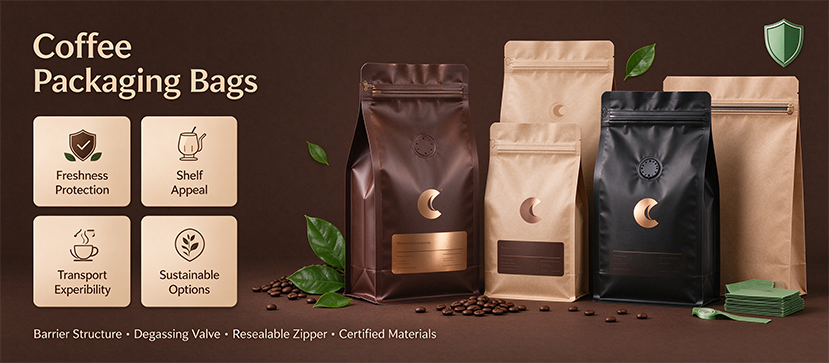
A coffee packaging bag is a flexible packaging solution designed to protect coffee from oxygen, moisture, light exposure, and external contamination.
Because freshly roasted coffee continues releasing carbon dioxide after roasting, many coffee bags incorporate features such as one-way degassing valves, resealable zippers, and high-barrier film structures to maintain freshness and product quality. Coffee packaging commonly includes stand-up pouches, flat bottom bags, side gusset bags, quad seal bags, and custom coffee pouch solutions.
1. Freshness Protection
The primary purpose of coffee packaging is preserving flavor and aroma. High-barrier structures help minimize oxygen and moisture exposure while maintaining coffee quality throughout the supply chain.
2. Stronger Shelf Appeal
Packaging is often the first interaction consumers have with your brand. Premium finishes, custom printing, and well-designed graphics help products stand out in competitive retail environments.
3. Better Transportation Performance
Durable materials and reliable sealing reduce damage during shipping, warehouse handling, and retail distribution.
4. Improved Customer Experience
Features such as resealable zippers, easy-open notches, and flat-bottom structures improve usability while increasing perceived value.
5. Sustainability Opportunities
Many foodservice and retail buyers are now actively seeking recyclable, compostable, or reduced-material packaging solutions. Sustainable packaging has become an important purchasing factor in many global markets.
| Industry | Typical Packaging Requirements |
|---|---|
| Restaurant Chains | Consistent supply, food safety compliance, bulk purchasing |
| Coffee Roasters | Premium branding, freshness preservation, custom printing |
| Food Delivery Companies | Lightweight and durable packaging |
| Distributors | Efficient warehousing and logistics |
| Wholesalers | Competitive pricing and scalable production |
| Hospitality Industry | Single-serve and private-label packaging solutions |
| Sustainable Packaging Buyers | Certified eco-friendly materials |
Choose the Right Bag Format
| Bag Type | Best Application | Shelf Impact |
|---|---|---|
| Flat Bottom Coffee Bag | Premium retail coffee | ★★★★★ |
| Stand Up Coffee Pouch | Retail & E-commerce | ★★★★☆ |
| Side Gusset Bag | Bulk coffee distribution | ★★★☆☆ |
| Flat Pouch | Samples and single-serve products | ★★★☆☆ |
| Custom Coffee Pouch | Private-label coffee brands | ★★★★★ |
Evaluate Barrier Performance
Not all coffee packaging bags offer the same level of protection. Buyers should compare:
- Oxygen barrier performance
- Moisture barrier performance
- Light protection
- Aroma retention
- Seal integrity
Consider Sustainability Requirements
Modern coffee buyers increasingly request recyclable mono-material structures, compostable materials, FSC-certified paper, and lower-carbon packaging options. Environmental claims should always be supported by certifications and technical documentation.
Customization Options
- Custom dimensions and capacities
- Matte or glossy finishes
- Metallic effects
- Spot UV printing
- Custom windows
- Degassing valves
- Resealable zippers
- Private-label branding
- Custom shapes and structures
Many coffee brands work with suppliers such as coffeeteabag.com to develop customized coffee pouch solutions that match their brand identity and market positioning. Coffeeteabag.com supports various coffee packaging formats including flat bottom bags, side gusset bags, stand-up pouches, compostable coffee bags, and custom printed packaging.
MOQ Considerations
| Project Type | Typical MOQ |
|---|---|
| Stock Coffee Bags | 500 – 5,000 pcs |
| Custom Printed Coffee Bags | 5,000 – 20,000 pcs |
| Large Retail Programs | 20,000+ pcs |
MOQ varies depending on material structure, printing complexity, and production method. Buyers launching new brands often begin with smaller trial orders before scaling up.
Certification Requirements
Depending on your target market, suppliers may need to provide:
- FDA Food Contact Compliance
- EU 1935/2004 Compliance
- ISO 9001
- BRCGS Certification
- HACCP Systems
- Migration Testing Reports
- FSC Certification
Choosing the right coffee packaging bags involves much more than selecting a bag style. Buyers should evaluate freshness protection, material performance, sustainability goals, compliance requirements, customization options, MOQ flexibility, and supplier reliability.
For restaurant chains, distributors, wholesalers, and coffee brands, packaging plays a critical role in protecting product quality and supporting long-term business growth.
Companies sourcing through coffeeteabag.com often benefit from access to multiple packaging structures, custom printing solutions, sustainable material options, and professional manufacturing support. By focusing on both performance and branding, businesses can select packaging that protects not only their coffee, but also their reputation.
Post time: Sep-18-2026