A PLA tea bag is made from polylactic acid, a bio-based polymer commonly produced from plant-derived sugars such as corn starch or sugarcane.
PLA is often used for pyramid tea bags, rectangular sachets, herbal infusions, fruit tea, and premium loose-leaf products. It offers good transparency, reliable sealing, and enough space for tea leaves to expand during brewing.
However, buyers should understand one important point: PLA is not automatically home compostable or plastic-free. Most PLA materials require industrial composting conditions.
Product Overview
PLA tea bags are usually made from mesh or nonwoven PLA fibers.
Common formats include:
- Pyramid tea bags
- Rectangular tea bags
- Tag-and-string tea bags
- Empty preformed bags
- PLA mesh rolls
- Fully filled private-label tea bags
Pyramid bags are popular because they allow larger tea leaves, flowers, and fruit pieces to expand more freely than flat paper sachets.
Main Materials
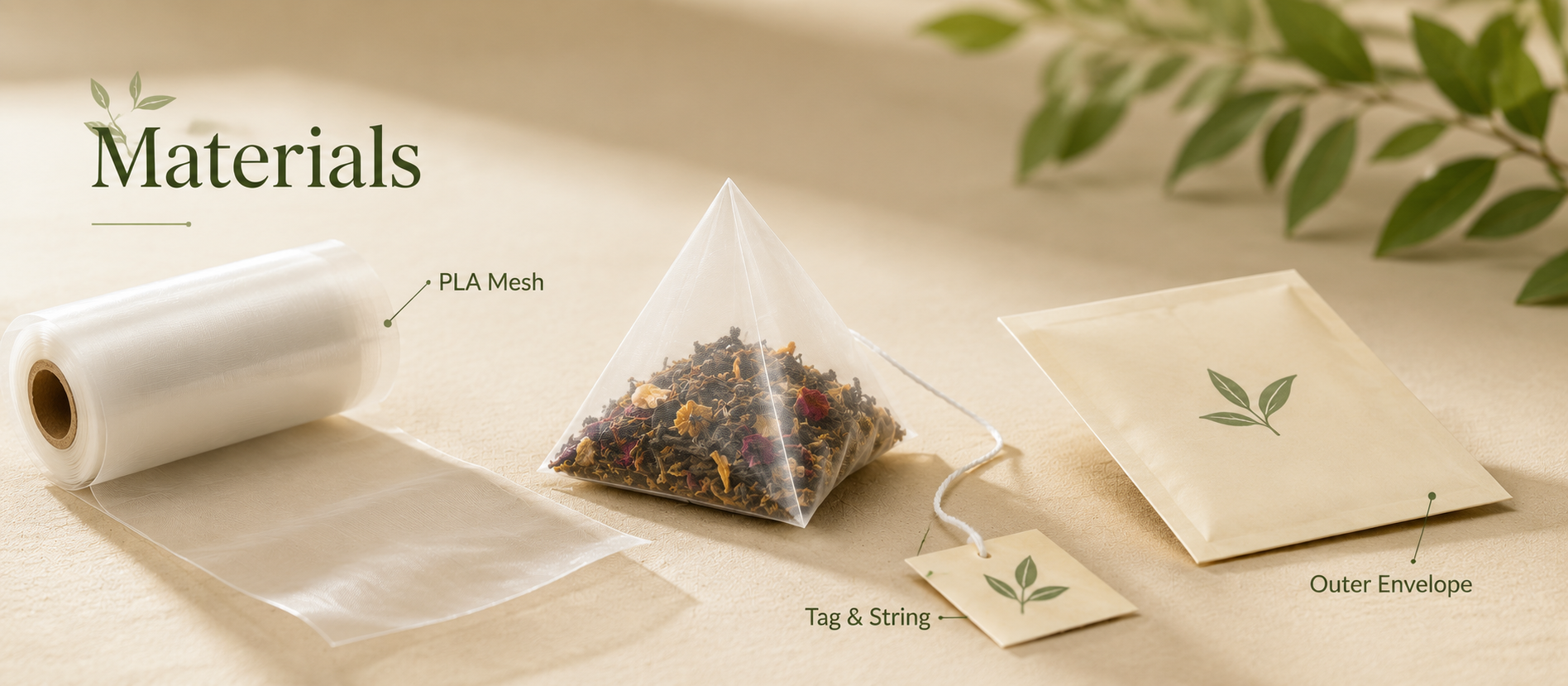
PLA Mesh
PLA mesh is transparent and suitable for premium tea blends.
It offers:
- Good product visibility
- Strong wet performance
- Heat-sealing compatibility
- Controlled water circulation
The mesh size should match the tea blend. Large leaves work well with open mesh, while rooibos and finely cut herbs require a tighter structure.
PLA Nonwoven Fabric
PLA nonwoven material has a softer, more paper-like appearance.
It provides better retention for fine particles but is less transparent than mesh.
Tag, String, and Outer Envelope
A finished tea bag may also include:
- PLA or cotton thread
- Printed paper tag
- Adhesive or heat-sealed attachment
- Individual outer envelope
- Retail carton
The complete packaging structure should be reviewed before making environmental claims.
Is a PLA Tea Bag Biodegradable?
PLA can break down under suitable controlled conditions, but most standard PLA requires industrial composting.
It may not decompose quickly in:
- Home compost
- Soil
- Landfills
- Seawater
- Normal outdoor conditions
A biodegradable tea bag claim should be supported by product-specific certification.
Buyers should ask whether the certificate covers the mesh, thread, tag, and adhesive—not only the raw PLA fiber.
Common Applications
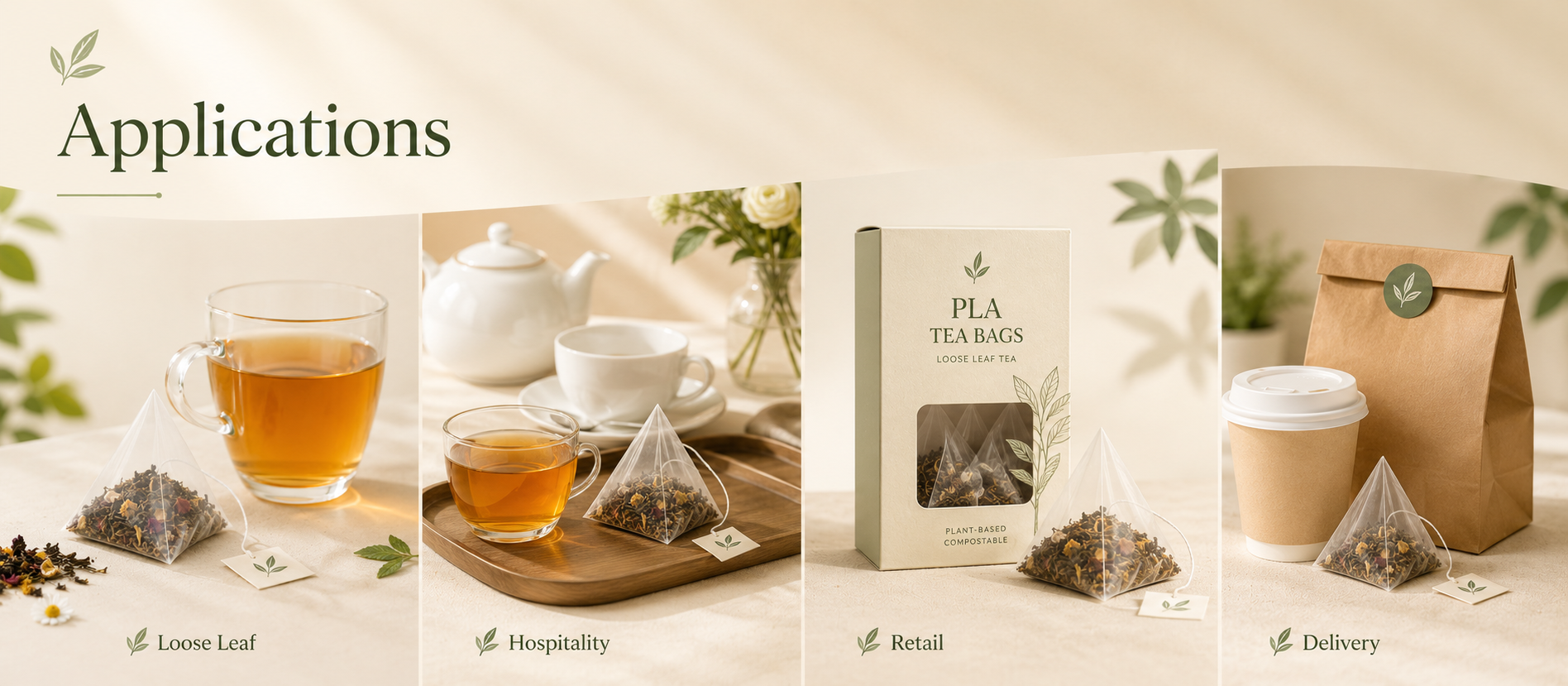
Premium Loose-Leaf Tea
PLA pyramid bags are suitable for:
- Black tea
- Green tea
- Oolong tea
- Flower tea
- Herbal tea
- Fruit blends
The transparent material helps display attractive ingredients.
Hotels and Restaurants
Hotels, cafés, and restaurant chains use PLA tea bags for convenient portion control and premium presentation. Important considerations include tag length, cup compatibility, brewing strength, and individual envelope barrier.
Retail and Gift Products
PLA tea bags work well in cartons, tins, variety packs, subscription boxes, and gift sets.
Food Delivery
Individually wrapped tea bags can be included in breakfast boxes, wellness kits, and meal deliveries.
The outer pouch should protect the tea from moisture and food odors.
Main Advantages
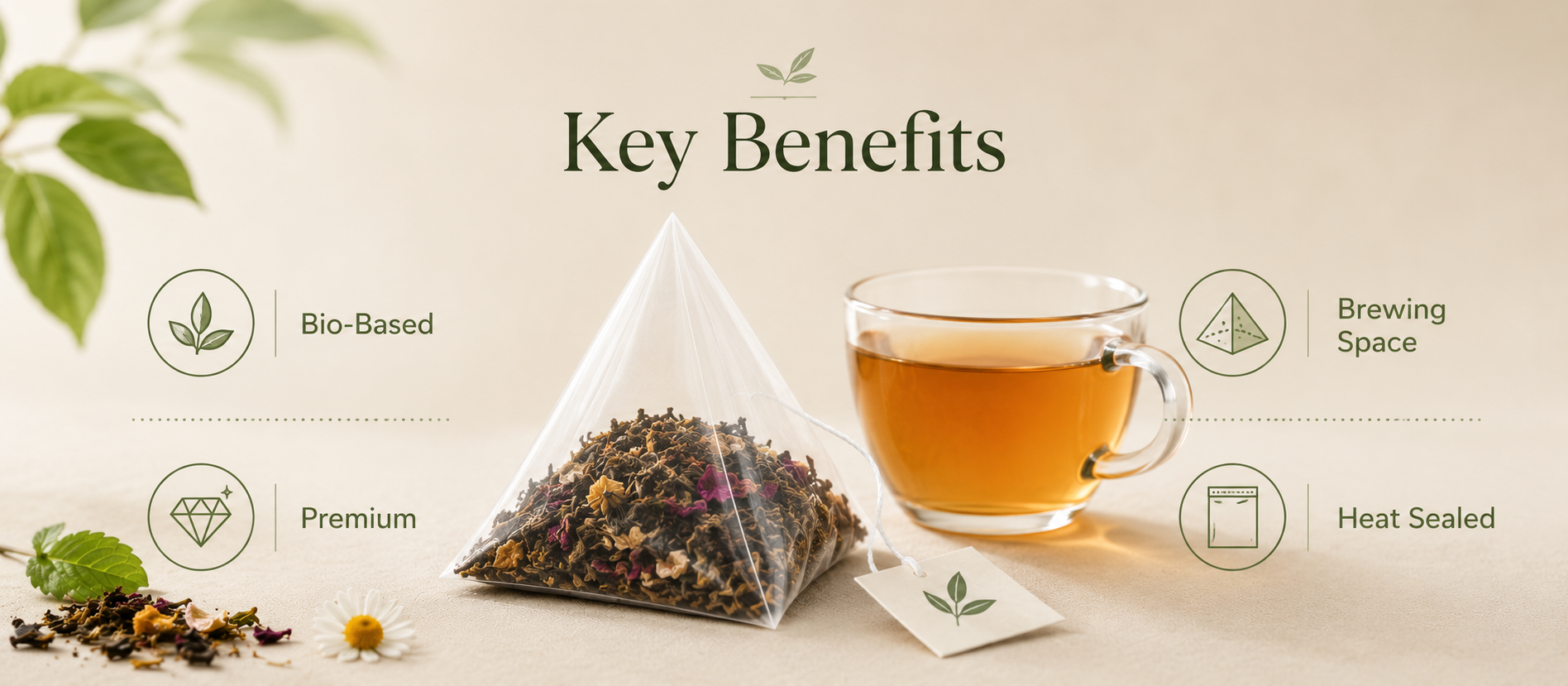
Bio-Based Material
PLA is commonly made from renewable plant feedstocks and can reduce reliance on conventional petroleum-based plastics.
Premium Appearance
Transparent mesh makes whole leaves, flowers, and fruit pieces visible.
More Brewing Space
Pyramid bags allow tea ingredients to expand and circulate during brewing.
Heat-Sealable
PLA works with many automatic tea bag packaging systems.
Strong When Wet
The material generally keeps its shape during brewing and removal.
Neutral Taste
High-quality PLA normally has little effect on tea flavor, although sensory testing is still recommended.
Material Comparison
| Material | Main Advantage | Main Limitation | Typical Use |
|---|---|---|---|
| PLA mesh | Transparent and heat sealable | Usually needs industrial composting | Pyramid tea bags |
| PLA nonwoven | Better fine-particle retention | Less transparent | Herbal and rectangular bags |
| Nylon mesh | Strong and heat resistant | Petroleum-based | Premium pyramid bags |
| PET mesh | Stable and economical | Conventional plastic | Mass-market products |
| Filter paper | Familiar and affordable | Less brewing space | Standard flat tea bags |
| Cotton or muslin | Natural appearance | Higher cost | Specialty loose-leaf tea |
Customization Options
PLA tea bags can be customized by:
- Bag shape
- Bag size
- Mesh density
- Material weight
- Tag shape
- String length
- Logo printing
- Outer envelope design
- Carton style
- Tea filling weight
- Nitrogen flushing
- Date coding
The bag size should match the volume of the ingredients, not only their weight.
Three grams of black tea may fit easily, while three grams of chamomile or dried fruit may require a larger bag.
Sourcing Considerations
Test the Final Tea Blend
Always test the actual tea, filling weight, and brewing conditions.
Check:
- Water circulation
- Brewing time
- Particle leakage
- Bag strength
- Seal quality
- Taste and odor
- Ingredient expansion
At Tonchant, factory tests often show that particle size matters more than total weight. A material that works for whole-leaf tea may leak fine rooibos.
Confirm Machine Compatibility
For automatic packing, provide the supplier with:
- Machine model
- Roll width
- Sealing temperature
- Bag size
- Operating speed
- Tag and string requirements
PLA can be sensitive to temperature settings, so machine trials are recommended.
Review Storage Conditions
PLA material should be protected from prolonged heat and humidity. Rolls and empty bags should remain sealed until use and be stored in a cool, dry area.
MOQ
MOQ depends on the level of customization.
| Product Type | Relative MOQ |
|---|---|
| Stock empty PLA bags | Low |
| Standard PLA roll material | Low to medium |
| Custom bag size | Medium |
| Printed tags | Medium |
| Printed outer envelopes | Medium to high |
| Custom mesh specification | High |
| Finished private-label tea | Depends on tea and packaging |
MOQ may apply separately to each size, material, flavor, or printed design.
For a first order, standard bags with digitally printed outer envelopes usually offer more flexibility.
Lead Time
Stock PLA tea bags may be available within one to three weeks.
Custom products commonly require four to eight weeks after artwork and specifications are approved.
Lead time may include:
- Material selection
- Sample filling
- Brewing tests
- Artwork approval
- Printing
- Bag production
- Filling and sealing
- Inspection
- Packing and shipment
Custom mesh development and complex gift packaging may take longer.
Certificates and Compliance
Relevant documentation may include:
- Food-contact declaration
- Migration test report
- FDA-related documentation
- EU food-contact compliance
- ISO 9001
- ISO 22000
- HACCP
- BRCGS Packaging Materials
- Industrial compostability certification
- Home compostability certification
- FSC certification for paper tags and cartons
Buyers should confirm that each document applies to the exact PLA grade, finished bag, and production site.
A raw-material certificate does not automatically cover the complete tea bag.
Frequently Asked Questions
What is a PLA tea bag made from?
It is made from PLA fibers produced from plant-derived sugars. A finished bag may also contain thread, a paper tag, ink, and an outer pouch.
Is a PLA tea bag plastic-free?
No. PLA is a bio-based polymer and is technically a type of plastic.
Is a PLA tea bag home compostable?
Most conventional PLA requires industrial composting. Only use a home-compostable claim when supported by specific certification.
Can PLA tea bags be heat sealed?
Yes. PLA materials are widely used on heat-sealing tea bag machines, but the correct temperature and pressure must be tested.
Which tea works best in PLA pyramid bags?
Whole-leaf tea, flowers, fruit blends, and larger herbal ingredients work especially well.
What is the typical MOQ?
Stock bags have the lowest MOQ. Custom sizes, tags, envelopes, and mesh specifications require larger orders.
What information is needed for a quotation?
Provide the bag shape, size, tea type, filling weight, material preference, tag requirements, artwork, quantity, destination market, and certification needs.
Conclusion
A PLA tea bag is a bio-based tea filter commonly used for pyramid bags, whole-leaf tea, herbal blends, and premium single-serve products.
Its main benefits are transparency, brewing space, wet strength, and heat-sealing performance.
Still, buyers should be careful with environmental claims. PLA does not automatically mean home compostable, plastic-free, or quickly biodegradable.
A successful biodegradable tea bag project requires the bag material, tea particle size, filling weight, machine settings, tag, envelope, and certifications to work together.
Before mass production, test the complete product under real brewing and packing conditions. This is the best way to confirm filtration, sealing, flavor, and commercial reliability.
Post time: Jul-20-2026