Introduction
Coffee filter paper may appear to be a simple consumable, but for coffee roasters, packaging manufacturers, distributors, coffee equipment brands, and specialty coffee businesses, it is one of the most critical components in the brewing process.
A filter paper directly affects extraction consistency, brewing speed, cup clarity, flavor neutrality, and even machine efficiency. The difference between average and high quality coffee filter paper is often invisible to the eye but immediately noticeable in brewing performance.
Many buyers focus primarily on price, thickness, or color. However, experienced sourcing teams understand that material composition, porosity, wet strength, food safety compliance, and manufacturing consistency have a far greater impact on product performance. A filter that tears during brewing, slows drainage unexpectedly, or introduces unwanted paper taste can negatively affect the consumer experience and damage brand reputation.
This guide explains what defines high quality coffee filter paper, how to evaluate suppliers, and what buyers should consider before placing an order.
Product Overview
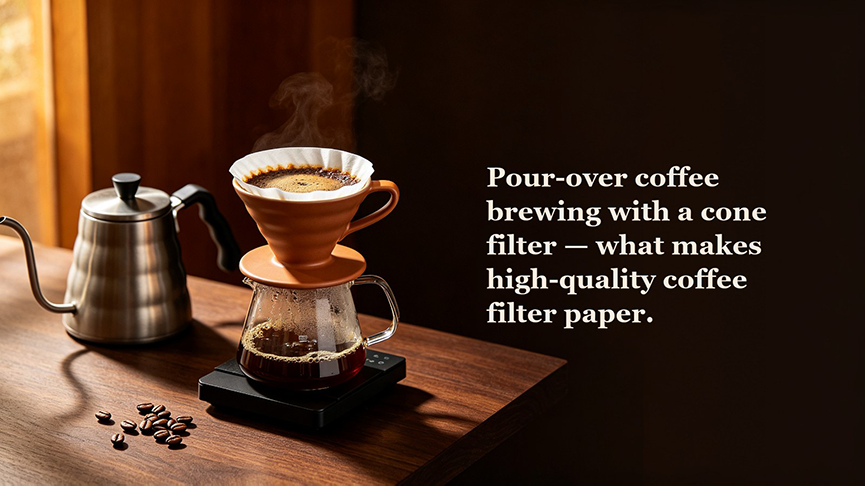
Coffee filter paper is a porous filtration material designed to separate coffee grounds from brewed coffee while allowing water and dissolved flavor compounds to pass through.
Primary Functions:
- Retaining coffee grounds
- Controlling flow rate
- Supporting consistent extraction
- Reducing sediment
- Improving cup clarity
- Providing clean flavor performance
Commercial Applications:
- Pour-over coffee filters
- Drip coffee bags
- UFO coffee filters
- Basket coffee filters
- Commercial brewing systems
- Single-serve coffee products
- Coffee filter rolls for automatic production
A quality filter should remain almost “invisible” during brewing. It should not contribute unwanted flavors, alter brewing consistency, or create operational problems during manufacturing.
Why Quality Matters
The filter paper becomes part of the brewing system. Even when using the same coffee beans, grind size, and brewing equipment, differences in filter quality can influence:
Materials: The Foundation
The raw material used in filter paper largely determines its performance.
Virgin Wood Pulp
Most premium food grade filter paper is manufactured using virgin wood pulp. Compared with recycled paper, virgin pulp provides better purity, consistent fiber structure, and stable filtration performance.
Abaca Fiber
Often called Manila hemp, these long natural fibers offer exceptional wet strength, better porosity control, and improved durability.
Bleached vs Unbleached Coffee Filter Paper
| Feature | Bleached | Unbleached |
|---|---|---|
| Appearance | White | Natural Brown |
| Flavor Neutrality | Excellent | May require rinsing |
Advantages of High Quality Filter Paper
- ✔ More consistent extraction
- ✔ Cleaner cup profile
- ✔ Better wet strength
- ✔ Reduced production waste
- ✔ Improved machine efficiency
- ✔ Lower failure rates
Certificates and Compliance
When sourcing food grade filter paper, buyers should verify relevant certifications:
Conclusion
Choosing high quality coffee filter paper is about much more than selecting a sheet of paper. It influences brewing consistency, cup clarity, and ultimately customer satisfaction.
Post time: Sep-15-2026