What Materials Are Used in Coffee Filter Bags? A B2B Sourcing Guide
What Materials Are Used in Coffee Filter Bags?
A practical sourcing and technical guide for packaging distributors, food service buyers, and sustainable procurement teams.
As single-serve drip bags and pour-over pouches move from specialty Asian markets into global retail, procurement managers face a crowded material landscape. Should you stick with traditional filter paper, move to synthetic non-wovens, or invest in plant-based PLA mesh?
This guide breaks down what actually goes into making a coffee filter bag, how these materials run through real packaging machines, and how to choose the right substrate for your brand’s operational and sustainability targets.
Substrate Breakdown
Cellulosic Paper Webs
- Wood Pulp Fibers
- Abaca / Manila Hemp
- Synthetic Sealant Layer
Synthetic Non-Wovens
- Polypropylene (PP)
- Polyester (PET)
- Petroleum Derived
Bio-Based PLA Mesh
- Polylactic Acid (PLA)
- Sugarcane / Corn Starch
- Industrially Compostable
The Three Main Substrates Deep Dive
1. Cellulosic Filter Papers
This is the classic standard. Made from wood pulp or abaca (Manila hemp) fibers, paper relies on a dense, wet-laid mesh to catch grounds. However, pure paper won’t heat-seal on a modern form-fill-seal (FFS) machine. To fix this, mills blend in a thin layer of polyethylene (PE) or polypropylene (PP) fibers on one side so the bag seals shut under heat.
2. Synthetic Non-Wovens (PP & PET)
Synthetics took over the drip bag market because they are tough. Made from spunbond or meltblown petroleum polymers, polypropylene (PP) and polyethylene terephthalate (PET) don’t tear easily—even when soaked in near-boiling water. They run fast on automated packaging lines with minimal downtime.
3. Bio-Based PLA Non-Wovens
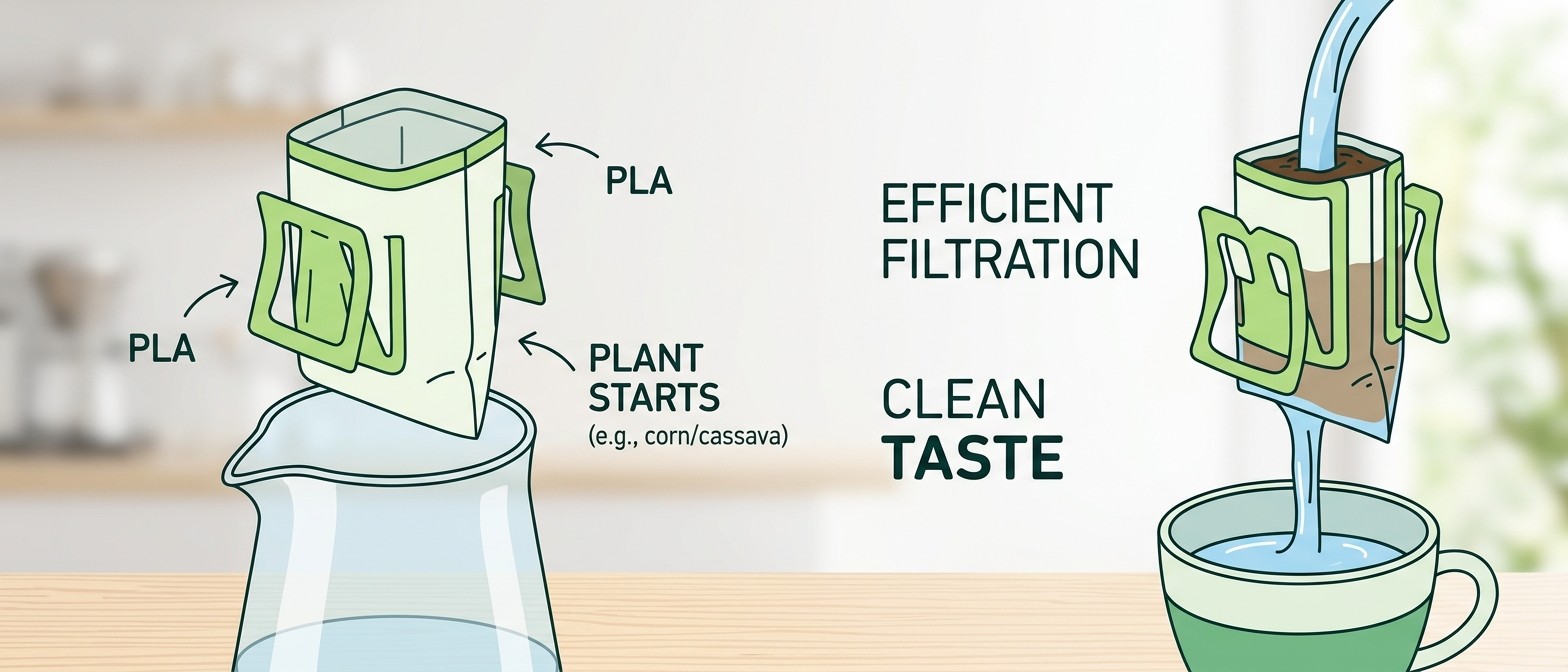
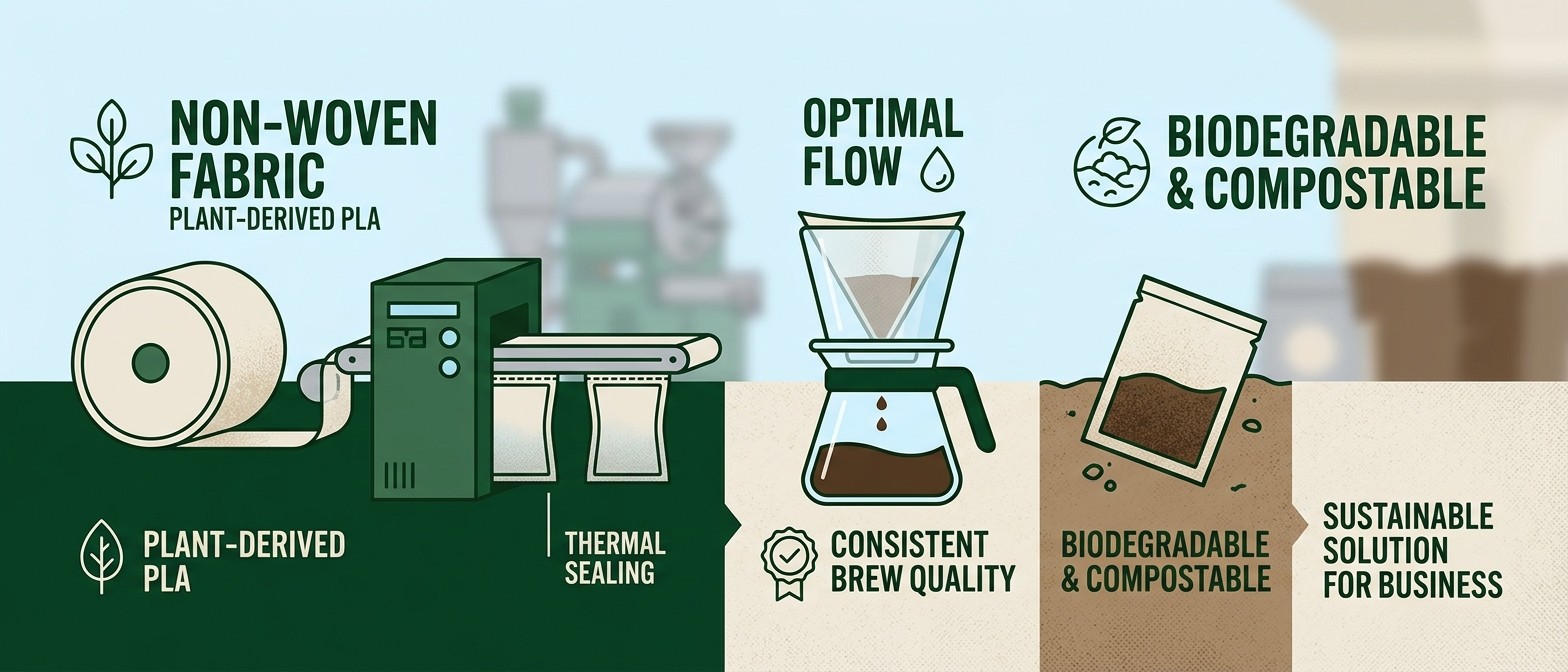
Polylactic acid (PLA) is the modern answer to plastic regulations. Derived from fermented plant starches like corn or sugarcane, a non woven coffee filter made from PLA looks and performs like synthetic mesh, but it’s certified industrially compostable. It’s quickly becoming the standard for specialty brands targeting high-end retail.
How These Materials Are Manufactured
Paper (The Wet-Laid Process)
Fibers are suspended in a water slurry and spread across a high-speed wire mesh screen. As water drains away, hydrogen bonds pull the plant fibers together into a sheet.
Non-Wovens (Spunbond & Ultrasonic Bonding)
Polymer resins (whether PP or PLA) are melted, forced through microscopic nozzles (spinnerets), and laid down in a web of continuous filaments. Heated rollers then press the web together at specific contact points to lock the fibers without using chemical glues.
Hands-On Material Comparison
| Practical Parameter | Paper + PE/PP Layer | Synthetic PP/PET Mesh | Bio-Based PLA Mesh |
|---|---|---|---|
| Sourcing Origin | Wood pulp / Abaca + plastic | Petroleum polymers | Renewable plant starches |
| Flavor Profile | Mild papery note if unrinsed | Completely neutral | Completely neutral |
| Wet Tear Strength | Fair (Risk of tear) | Excellent | High structural frame |
| Optimal Heat-Seal Temp | 120°C – 150°C | 130°C – 165°C | 115°C – 130°C |
| Best Sealing Method | Thermal jaw | Thermal jaw or Ultrasonic | Ultrasonic (Recommended) |
| Compostability | Landfill bound | Non-compostable | EN 13432 / ASTM D6400 |
| Relative Cost Tier | Baseline (1.0x) | 0.9x – 1.1x | 1.35x – 1.6x |
Real-World Strengths and Limitations
Paper & Abaca Blends
Lower material cost per unit; familiar organic paper texture.
Can absorb subtle aromatic oils; non-compostable due to plastic seal layers.
Polypropylene / PET
High machine reliability (80+ bags/min); excellent wet tensile strength.
Increasing regulatory ban risks on single-use petro-plastics globally.
PLA Filter Media
Zero paper taste; high visual clarity; meets corporate ESG directives.
35%–60% raw material premium; requires narrower thermal sealing windows.
Matching Material to the Application
Specialty Drip Hanging Ear Bags
Specialty roasters selling single-origin coffees generally prefer PLA filter bag options. The mesh lets consumers see the grind size, and the lack of paper flavor protects delicate floral notes.
Commercial Cold Brew Satchel Bags
Cold brew requires brewing for 12 to 24 hours in large volumes. Paper filters often soften, sag, or burst during removal under heavy liquid weight.
Key Considerations for Buyers
- 1
Food Contact Testing Under Heat
Request heavy metal leaching reports, overall migration limit (OML) test results, and sensory neutral-taste test verifications at 90°C–98°C extraction temperatures.
- 2
Ultrasonic vs. Thermal Sealing Compatibility
PLA responds best to high-frequency ultrasonic sealing, which prevents hard, brittle edges caused by traditional thermal heat jaws.
- 3
Basis Weight (GSM) Selection
Match GSM to extraction needs: 18–22 GSM for standard drip, 25–30 GSM for fine grinds, and 35–60 GSM for large cold brew pouches.
- 4
Vetting Third-Party Environmental Claims
Demand certified factory documentation: BPI (ASTM D6400) for North America, DIN CERTCO or TÜV AUSTRIA (EN 13432) for Europe, and FSC for cellulose sourcing.
- 5
Roll Slitting and Edge Tension
Partner with converters like Tonchant Coffeeteabag that offer precision slitting and custom-width rolls to prevent edge telescoping on automated packaging machines.
Frequently Asked Questions
Is PLA filter material actually better than traditional paper?
It depends on your priorities. For specialty roasters where delicate acidity is key, PLA is superior because it adds zero papery taste and offers high wet strength. For commodity coffee focused purely on raw cost, paper remains cheaper.
Can we run PLA non-woven rolls on our existing packaging machines?
Yes. However, you will likely need to adjust your settings by lowering heat-seal jaw temperatures by 15°C to 25°C compared to Polypropylene, or transition to ultrasonic sealing units.
Why does unbleached Kraft paper sometimes taste woody during brewing?
Unbleached paper retains natural wood lignins. Hot water washes these compounds into the cup, creating a cardboard or woody off-taste. Oxygen-bleached paper reduces this, while synthetic/PLA mesh eliminates it entirely.
What causes coffee grounds to leak out of the bottom seam?
Seam blowouts usually stem from seal jaw temperature drift or poor fiber fusion in low-grade non-woven fabric. Overheating burns through thin PLA fibers, while underheating results in incomplete bonding.
What is the typical shelf life of raw PLA roll stock in a warehouse?
Stored below 30°C and under 60% relative humidity out of direct sunlight, unopened PLA non-woven rolls maintain their structural integrity and tensile strength for 12 to 18 months.
Final Thoughts for Procurement Teams
Balancing extraction performance, line speed, material costs, and environmental mandates is an ongoing challenge in coffee packaging. Synthetic non-wovens offered reliability in the past, but the industry is moving quickly toward renewable alternatives.
Bio-based materials like PLA non-wovens bridge the performance gap—offering structural strength, clean extraction, and speed alongside certified industrial compostability.
Need sample roll stock for testing?
Test sample rolls on your actual filling machines under real factory conditions.
Post time: Oct-16-2026